Jacky
Emerging from Academic Excellence
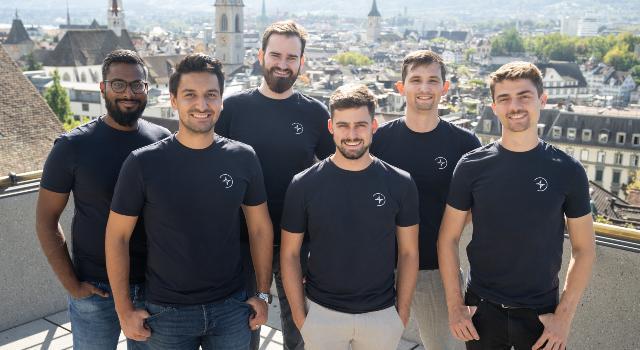
Founded in 2024, Tethys Robotics emerged from the prestigious ETH Zurich ecosystem, established by a team of robotics experts including CEO Jonas Wüst (Robotics Master’s graduate and former ETH researcher), CTO Pragash Sivananthaguru (Biomedical Engineering specialist), and COO Johannes Lienhart (Robotics Master’s alumnus). This spin-off focuses exclusively on developing cutting-edge underwater inspection robotics. Addressing Critical Industry Challenges.
Traditional underwater operations face formidable obstacles—hiring divers exposes personnel to life-threatening risks including decompression sickness, drowning, and extreme physiological stress. Meanwhile, conventional semi-autonomous underwater vehicles struggle in low-visibility environments and lack reliable positioning capabilities without GPS signals. The market opportunity is substantial, with the global underwater inspection and search & rescue sectors projected to exceed $8 billion in annual growth, and the seabed inspection market alone valuing over €5 billion annually.
Acoustic Precision in Challenging Waters
Tethys Robotics has pioneered the world’s first autonomous underwater inspection robot capable of operating in high-intensity currents. Their breakthrough solution utilizes advanced acoustic detection technology to navigate turbid waters where traditional ROVs and divers face insurmountable challenges. The system employs a sophisticated sensor array including Doppler Velocity Log (DVL), side-scan, and forward-looking sonar to achieve what was previously impossible in near-zero visibility conditions. Advanced Technological Capabilities.
The Tethys underwater robotic system delivers unparalleled performance:
- ••360-degree Environmental Awareness: Proprietary algorithms process acoustic sensor data to provide complete terrain mapping and precise navigation
- ••High-Current Operation: 360º motion control enables stable inspections in currents reaching 3.5 knots
- ••Dual Operational Modes: Seamless transition between Remotely Operated (ROV) and Fully Autonomous (AUV) functionality
- ••Compact Design: Weighing just 35kg with 4-hour runtime and 2km range, deployable in depths up to 300 meters within 10 minutes
Modular Inspection Solutions
The system’s innovative design features:
- ••Payload Flexibility: Modular integration of HD cameras, metal detectors, and manipulator arms
- ••Enhanced Data Collection: Real-time 3D mapping enhanced with environmental data (metal detection, current analysis, pressure, temperature, oxygen levels, structural thickness, and Non-Destructive Testing)
- ••Precision Interaction: Gripper system matching diver lifting capacity for safe equipment interaction
Market Expansion Strategy. Targeting critical infrastructure maintenance, Tethys Robotics has already partnered with archaeologists, hydropower operators, and public authorities for bridge pier inspections. Future applications extend to offshore wind farms, oil and gas platforms, and various underwater environments requiring reliable inspection solutions.
Strategic Funding Milestone
In September 2023, Tethys Robotics secured 150,000 Swiss Francs from Venture Kick to accelerate customer pilot projects and expand international market demonstrations, positioning the company for global impact in underwater robotics innovation.
Test the product over more than one session.
A first conversation can show personality, but long-term quality appears only after the system has accumulated memory, preferences and notifications. Return later, change a preference and see whether the companion adapts without losing its core identity. Longitudinal testing also exposes repetition and stale context that a short demo cannot reveal.
Use controls as part of the quality test
Try the memory, notification, privacy and reset controls before you need them. A strong companion should make important settings understandable without forcing the user to delete the entire relationship to repair one problem. The best experience becomes more relevant over time while remaining easy to correct.
Look for continuity without constant callbacks. A companion should use remembered context when it helps, not repeatedly announce that it remembers. Good continuity reduces the need for the user to restate important information and makes recurring activities easier to resume.
If every response references old history, personalization can feel forced rather than natural.
Check how the system handles a mistake
Correct a fact, reject a suggestion or change topic abruptly. The companion should repair the interaction and update the relevant state instead of arguing or repeating the same assumption later. Evaluate whether the relationship remains user-led.
Notifications, progression and premium features should support the user’s chosen interaction rather than manufacture urgency. Quiet hours, frequency controls and easy cancellation are practical signs that the product respects the user’s pace.
Compare richer media with the core conversation
Voice, images and video are valuable when they reinforce the same identity. If media quality is inconsistent or arrives too slowly, a simpler response may produce a better overall experience.


 admin