Jacky
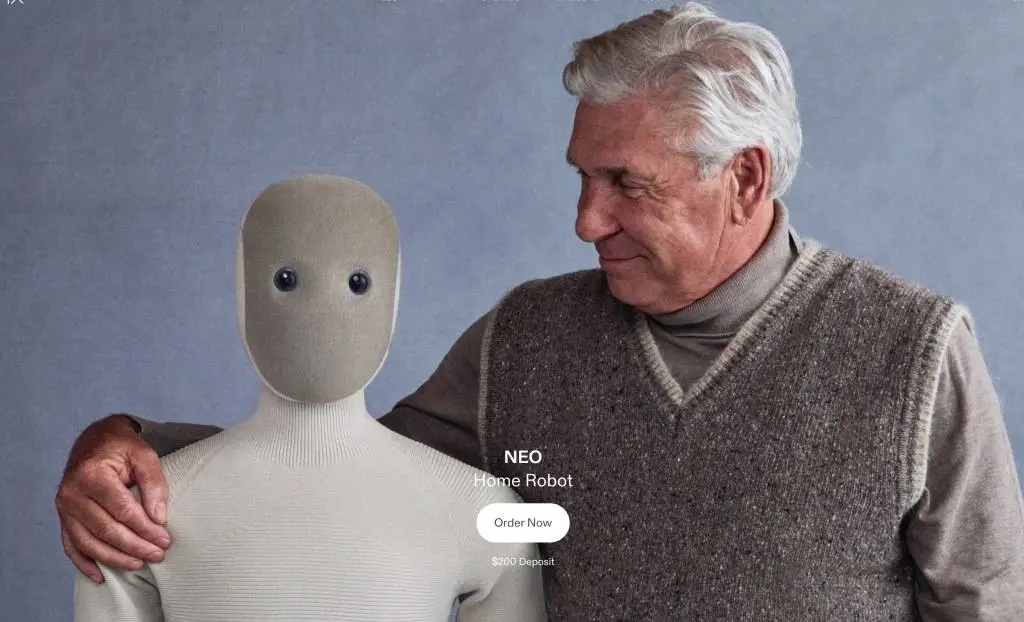
Norwegian robotics firm 1X has launched NEO, a household humanoid robot designed to automatically perform daily chores and provide personalized assistance via built-in artificial intelligence (AI). It is priced at $20,000 for outright purchase, or available through a subscription model at $499 per month.
NEO helps humans manage household tasks efficiently. With simple voice commands or button presses from users, it can process daily tasks such as folding clothes and organizing items in real time. It can also learn new skills by scheduling expert guidance. Equipped with a built-in large language model (LLM) and multimodal perception capabilities, NEO supports natural conversations and offers contextual assistance—for example, identifying ingredients to recommend recipes. It also has a memory function, enabling consistent and personalized interactions. Through AI learning in real-world scenarios and software updates, NEO continuously evolves in home environments, gradually expanding its service capabilities. Its hardware platform adopts a patented tendon-driven system, ensuring gentle and safe movements. It features dexterous hands with 22 degrees of freedom and a soft body structure throughout. Weighing approximately 30 kilograms, it can lift objects of nearly 70 kilograms, while operating at a noise level of only 22 decibels.
Pre-orders for NEO are now open, with the first batch of orders to be delivered in 2026. Berent Bornich, CEO and founder of 1X, stated: “Humanoid robots were once the stuff of science fiction… Later, they became research tools, but now, with the launch of NEO, they have truly become a reality.”
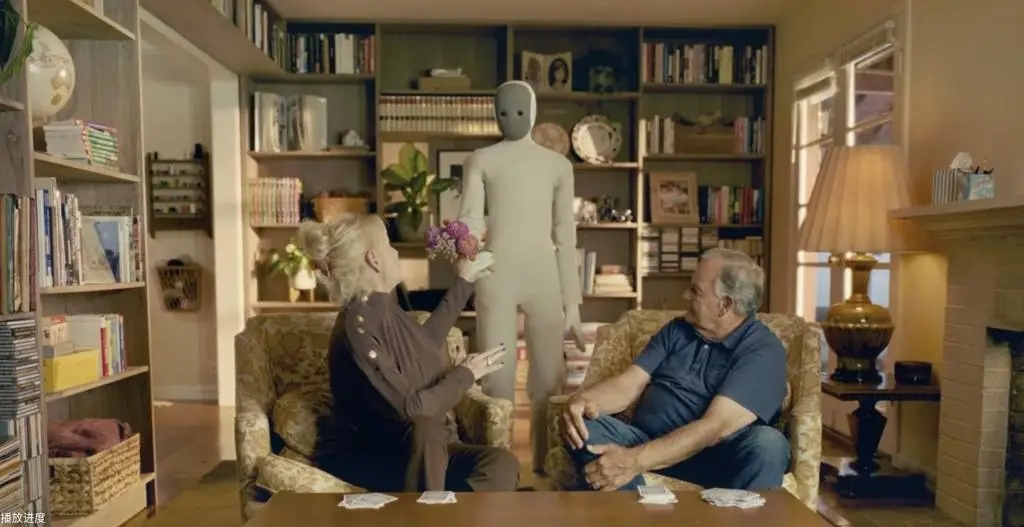
However, as such robots with remote assistance functions enter households, widespread concerns have been raised regarding privacy protection. When NEO’s expert mode is activated, 1X employees can view the user’s home environment from NEO’s perspective. In response, 1X has emphasized that all household assistant services can only be activated upon active request by the user, and users can terminate the service at any time.
Meanwhile, the NEO robot is currently unable to complete all household chores independently. Some functions still require remote control by 1X employees, who direct the robot’s movements like manipulating a puppet. This human assistance helps 1X accumulate training data for AI development.
“True autonomy remains the biggest challenge facing the humanoid robot industry,” Brett Adcock, CEO of Figure AI, a U.S.-based humanoid robot startup, has also noted. Currently, no product in the entire humanoid robot industry can achieve fully autonomous operation.
Evaluate whether the relationship remains user-led
Notifications, progression and premium features should support the user’s chosen interaction rather than manufacture urgency. Quiet hours, frequency controls and easy cancellation are practical signs that the product respects the user’s pace.
Compare richer media with the core conversation
Voice, images and video are valuable when they reinforce the same identity. If media quality is inconsistent or arrives too slowly, a simpler response may produce a better overall experience.
Test the product over more than one session
A first conversation can show personality, but long-term quality appears only after the system has accumulated memory, preferences and notifications. Return later, change a preference and see whether the companion adapts without losing its core identity.
Longitudinal testing also exposes repetition and stale context that a short demo cannot reveal.
Use controls as part of the quality test
Try the memory, notification, privacy and reset controls before you need them. A strong companion should make important settings understandable without forcing the user to delete the entire relationship to repair one problem.
The best experience becomes more relevant over time while remaining easy to correct.
Look for continuity without constant callbacks
A companion should use remembered context when it helps, not repeatedly announce that it remembers. Good continuity reduces the need for the user to restate important information and makes recurring activities easier to resume.
If every response references old history, personalization can feel forced rather than natural.
Check how the system handles a mistake
Correct a fact, reject a suggestion or change topic abruptly. The companion should repair the interaction and update the relevant state instead of arguing or repeating the same assumption later.
A final long-term check
Repeat the same test after several days and after changing one setting. AI products accumulate memory, synchronization state and billing or permission history, so problems may appear only after the first-session novelty has passed.
The strongest products remain understandable as history grows: users can see what changed, correct the relevant state and continue without rebuilding the entire relationship.


 admin