Jacky
Jacky
According to Bloomberg, SpaceX, the space exploration technology company owned by Elon Musk, is accelerating its IPO plan recently. It is reported that the company targets a valuation of approximately $1.5 trillion, with a proposed fundraising amount far exceeding $30 billion. If successful, this will become the largest IPO in global history, surpassing the approximately $29 billion record set by Saudi Aramco in 2019.
The IPO timeline is targeted for the mid-to-late 2026, but it may be adjusted to 2027 depending on market conditions. The core drivers behind this ultra-large-scale listing plan are the high-speed growth of SpaceX’s Starlink satellite internet business and the prospects of its direct-to-cell phone services. Meanwhile, the research and development progress of its Starship heavy-lift rocket is also a key valuation support.
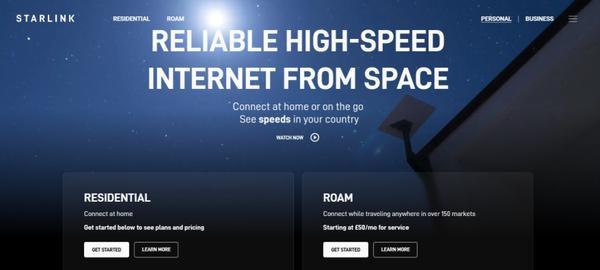
SpaceX expects its revenue to reach around $15 billion in 2025 and grow to $22 billion to $24 billion in 2026, with most of the revenue coming from Starlink. In the company’s recent internal share sale, the price per share was set at approximately $420, pushing the company’s valuation above the previously reported $800 billion and paving the way for a trillion-dollar valuation IPO.
1. Details of the IPO Plan: $1.5 Trillion Valuation and 2026 Timeline
According to sources familiar with the matter, SpaceX’s management and its advisory team are actively preparing to complete the listing in mid-to-late 2026. The company’s overall target valuation is about $1.5 trillion, a figure that will bring its market capitalization close to that of oil giant Saudi Aramco at the time of its record-breaking listing in 2019.
If 5% of the shares are sold at this valuation, SpaceX will raise approximately $40 billion, far exceeding Saudi Aramco’s $29 billion fundraising in that year, making it the largest IPO in history. Currently, SpaceX has “anchored” its fair market value by setting a secondary offering price of about $420 per share, which is regarded as a key preparatory step before the IPO.
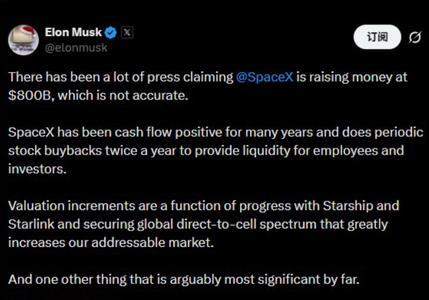
Musk posted on his social media platform X: “SpaceX has had positive cash flow for many years and conducts stock buybacks twice a year on a regular basis to provide liquidity for employees and investors.”
2. Business Support and Valuation Engines: Starlink and Starship
SpaceX’s confidence in accelerating its march to the public market mainly stems from the progress of its two core businesses. First is the Starlink satellite internet service. Not only has this business seen rapid growth in users and revenue, but its Direct-to-Cell blueprint is also regarded by Musk as “greatly expanding the potential market”, which is an important narrative for boosting valuation.
Second is the Starship rocket project. This heavy-lift vehicle for lunar and Mars missions represents SpaceX’s long-term vision and technological barriers in the space transportation field.
The company expects its 2026 revenue to reach $22-24 billion, with the main growth driver coming from Starlink. Although the idea of spinning off Starlink for an independent listing has been discussed for years, it now appears that an overall group listing has become a higher priority option.
3. IPO Fundraising to Be Directed to Space Data Centers; News Boosts Share Prices of Related Companies
Where will the huge IPO fundraising be used? Part of the funds will be invested in a rather sci-fi direction: developing space data centers, including purchasing chips needed for operation. Musk has previously shown interest in this during an event with Baron Capital.
This news has had an immediate impact on the market. After the plan was disclosed, the share prices of aerospace companies with business ties to SpaceX rose in response. The share price of EchoStar, which has agreed to sell spectrum licenses to SpaceX, soared 12% in a single day. The share price gain of aerospace transportation company Rocket Lab expanded to 4.3%.
SpaceX’s major long-term investors include venture capital firms such as Founders Fund, 137 Ventures, and Valor Equity Partners, while Fidelity Investments and Alphabet, the parent company of Google, are also its important shareholders. The IPO will provide an important exit channel for these early investors and inject an unprecedented scale of capital into the company’s next-step space infrastructure ambitions.
Conclusion: The Trillion-Dollar Valuation IPO Plan
SpaceX’s planned trillion-dollar valuation IPO is not just an ordinary listing, but also a landmark event for the arrival of the commercial aerospace era in the capital market.
If successful, this transaction will refresh the record for the world’s largest IPO scale, set a new value benchmark for the entire commercial aerospace industry chain, and may trigger a new round of space investment boom. As 2026 approaches, this star private company led by Musk is advancing at full speed towards the goal of becoming one of the world’s most valuable listed companies.