Jacky
Jacky
According to IBM’s latest annual report, the company had approximately 270,000 employees globally as of the end of 2024. Based on this figure, even the minimum layoff rate of 1% would mean that 2,700 people could lose their jobs.
However, IBM also emphasized that although this round of layoffs may affect some positions in the United States, the company expects its total number of employees in the U.S. to remain roughly the same as the same period last year. This suggests that while some roles may be cut, the company is also hiring in other areas.
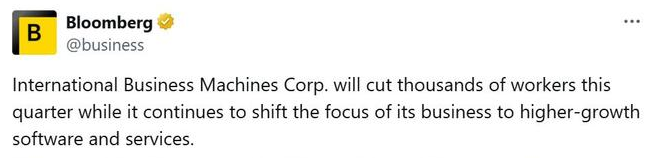
This round of layoffs is not an isolated case but part of a broader trend across the tech industry. Several major tech companies, including Amazon and Meta, have recently been downsizing their workforce, with executives generally aiming to boost productivity by increasing reliance on artificial intelligence (AI) tools.
For example, Amazon announced in October that it would lay off 14,000 corporate employees, while Meta’s AI division also cut 600 positions. The industry widely believes that leveraging AI to reduce costs and improve efficiency has become a core strategy for these tech giants.
IBM itself has long been exploring how AI can reshape its human resources. The company’s CEO, Arvind Krishna, revealed in May this year that AI systems had already taken over the work of about 200 HR department employees. He stated that by automating repetitive tasks, the company has been able to reallocate resources and hire more much-needed salespeople and software developers to drive business growth.
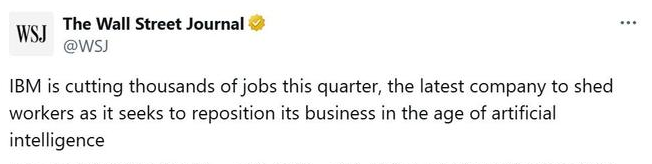
Notably, IBM’s announcement of layoffs comes at a time when its business performance remains strong. The company’s third-quarter earnings report, released on October 22, showed that both its profit and revenue exceeded market expectations, with software business revenue achieving a 10% year-over-year increase. Since Arvind Krishna took over as CEO in 2020, he has successfully helped IBM expand its revenue base, and this round of layoffs is seen as part of his ongoing efforts to optimize the company’s structure and focus on core business strategies.

 admin
admin