Jacky
Jacky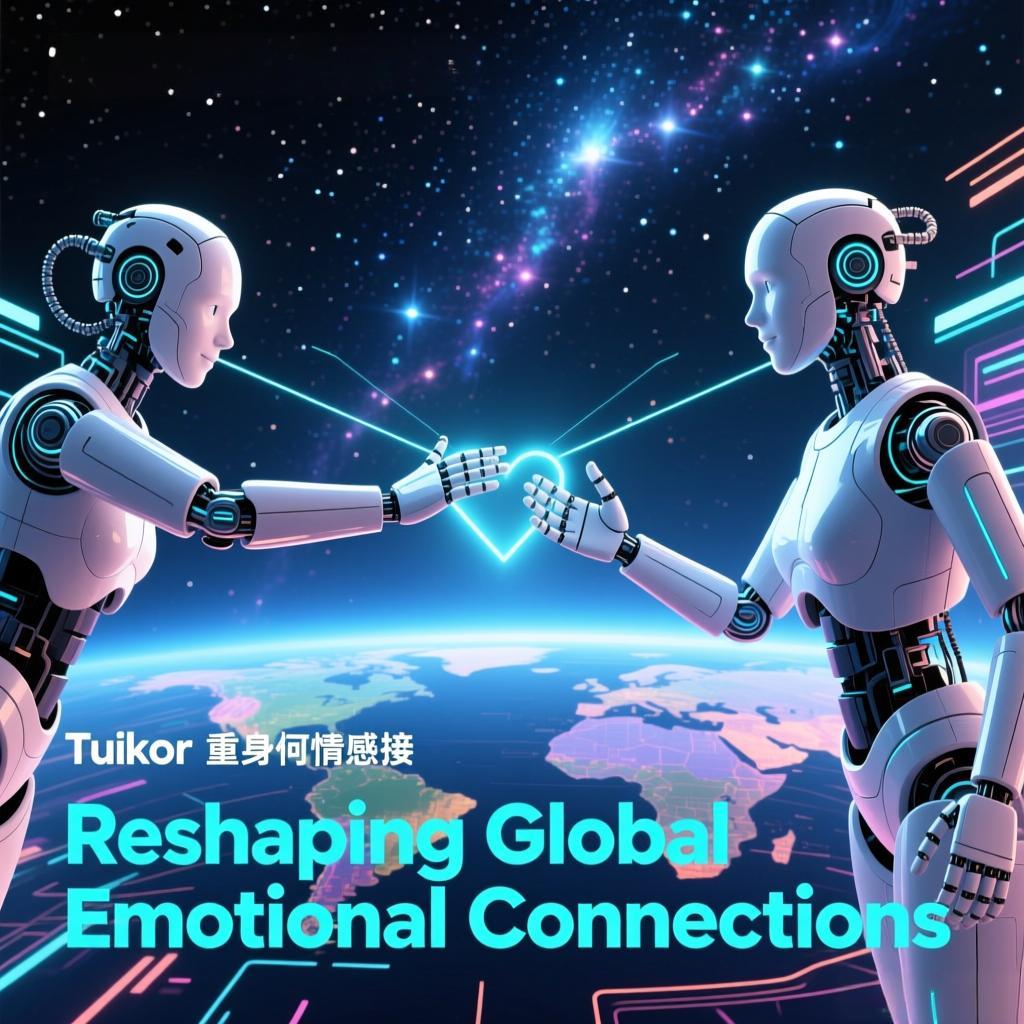
With the rapid advancement of artificial intelligence technology, AI-driven social interaction has evolved beyond simple chatbots, moving toward more profound and personalized experiences. In this wave of innovation, a product named Tuikor AI Digital Human Social Companion Agent is quietly making its mark in the global market with its unique technological approach and innovative model.
When Virtual Avatars Become the “Second Self”: How Technology is Redefining Social Boundaries
The core breakthrough of Tuikor lies in its self-developed digital human cloning technology. Unlike traditional virtual avatar creation, Tuikor allows users to generate a highly realistic personal digital avatar with simple operations—replicating not only appearance and voice but also attempting to capture personality traits and communication styles. This application of the “digital twin” concept in social interactions enables users to transcend temporal and spatial limitations, connecting with others through their digital avatars.
As virtual socialization becomes increasingly prevalent, the demand for authenticity in online interactions continues to grow. Tuikor addresses this need by creating a “simulated social experience,” transforming digital avatars from mere lines of code into extensions that carry users’ personalities and emotions.
From Functionality to Emotion: The Deep Evolution of AI Social Interaction
The common “24/7 availability” feature in modern social applications takes on new meaning with Tuikor. Its digital human agents not only provide round-the-clock companionship but also possess “permanent memory” capabilities, recording conversational details, user preferences, and emotional connections. As intimacy levels increase, interaction adaptability is continuously optimized—a design rooted in a deep understanding of the essence of human socialization: genuine relationships are built on sustained memory and empathy.
The integration of multimodal interaction capabilities further enriches the possibilities of social expression. Seamless switching between video, images, text, and other formats liberates digital socialization from the constraints of单一 forms, bringing it closer to the multi-layered, multi-dimensional communication of real-life interactions.
A New Ecosystem for the Creator Economy from a Global Perspective
Another distinctive feature of Tuikor is its deep empowerment of the creator economy. On traditional social platforms, content creators’ monetization paths are often limited by platform rules and traffic distribution. Tuikor, however, offers creators multiple passive income avenues such as subscription fees, direct tipping, and brand collaborations, while supporting customizable delivery rights. This enables creators to more autonomously manage their digital social identities.
The platform’s multi-channel, multi-brand, and multi-matrix synchronous operational model, along with its compliance adaptations for different regions worldwide, reflects its ambitious global strategy. This approach not only provides creators with broader market opportunities but also signals a future trend for AI social products—transcending geographical and cultural boundaries to build a truly global social network.
Privacy and Ethics: Concerns and Responses Behind the Boom of AI Socialization
As digital avatar technology matures, privacy protection and ethical issues are becoming increasingly prominent. Tuikor’s emphasis on designing in compliance with regulations across different global regions reflects the industry’s initial response to these challenges. However, ensuring user data security, preventing identity theft, and defining the legal responsibilities of digital avatar actions remain critical challenges that the entire AI social industry must address collectively.
Future Outlook: When Everyone Can Have a “Digital Avatar”
From emotional companionship to knowledge sharing, from entertainment interactions to skill-based teaching, Tuikor’s diverse application scenarios paint a picture of a possible future: everyone could own one or more digital avatars, capable of representing us in various social contexts, learning, or even working.
Yet, realizing this vision depends not only on technological advancements but also on society’s growing acceptance of digital identities and a redefinition of the boundaries between the virtual and the real. The exploration by Tuikor and similar AI social products represents small yet significant steps toward addressing these profound questions.
At the intersection of technology and humanity, Tuikor represents not just the innovation of a product but a reimagining of social interaction itself. When digital avatars can accurately replicate our appearance, voice, and even personality traits, how will the nature of socialization change? And where will the boundary between the real and the virtual lie?
The answers to these questions may be hidden in every interaction we have with AI social products and in the digital avatars that are becoming increasingly more like “us.”