Jacky
Jacky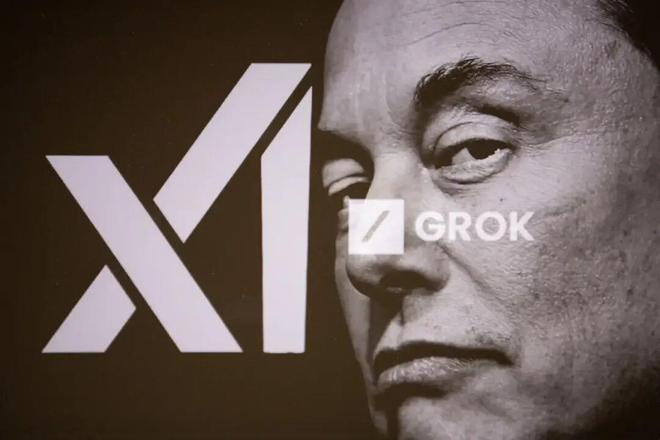
In Silicon Valley, what truly makes workers hesitate to make moves isn’t high salaries, but the vesting cliff.
If you don’t stay for a full year, all your previous achievements will be wiped out.
But now, this unwritten rule is starting to loosen. It is reported that OpenAI and xAI have both revised their rules.
This sends a clear signal: As soon as you step into the company, your equity starts to accumulate, and you can take away a portion even if you leave soon after.
Are these companies suddenly acting out of good conscience? The truth is that they are going to great lengths to adjust the rules in order to retain top talent.
Talent War Gets Out of Control: xAI Can’t Hold On, OpenAI Stems the Bleeding First
This rule relaxation began with xAI.
xAI: Difficulty in Recruitment Forces Rule Change
This year, xAI took the first “concession” in the talent war.
It quietly shortened the equity vesting period for new employees, which was originally a common “talent retention” mechanism in Silicon Valley.
Recruitment difficulties also increased: Candidates began asking “Is this year worth it?” during the interview stage, and many simply didn’t come.
The patience of the talent market lost its elasticity earlier than the system, forcing xAI to change its original rules.
OpenAI: Not Out of Goodwill, but to Stem the Bleeding in Advance
If xAI’s concession was “being chased by reality,” then OpenAI’s choice was a premeditated plan.
It recently announced the complete elimination of the “six-month equity vesting waiting period” for new employees.
New hires will start receiving equity as soon as they join, no longer bound by the constraint of “getting nothing if they don’t stay for six months.”
But this is by no means a sudden act of generosity; it is a precise move to “stem the bleeding in advance.”
This rule had previously been shortened from 12 months to 6 months, and now it has been completely abolished, which is almost unheard of in traditional tech companies.
Clearly, the talent war in the AI industry has entered a high-intensity phase.
Giants like Meta, Google, and Anthropic are offering comprehensive compensation packages worth up to hundreds of millions of dollars to snatch researchers and engineers.
This cost-blind poaching has turned the “time lock” from a screening mechanism into a competitive disadvantage.
Meta CEO Mark Zuckerberg likes to be involved in every aspect of AI talent recruitment.
Rather than sticking to the old rule, it’s better to include equity from day one. Such conditions are obviously more attractive and make it harder for employees to be poached.
The combined moves of xAI and OpenAI tell us two key signals:
First, competition no longer relies solely on money but also on winning in terms of “risk-taking and mobility.”
Second, the system itself is giving way to talent. When rules become a burden, companies have to redesign them.
Employee Perspective: A “Zero-Risk Trial” Contract
From the employee’s perspective, this rule change means much more than just getting more stocks.
The vesting cliff is essentially a time-binding mechanism that places all the uncertainty on the employees.
During this year, employees bear all the uncertainties: project cancellations, personnel changes, and misaligned directions… while their only bargaining chip is the time they silently invest.
Now, this logic has been completely disrupted. After the elimination of the vesting cliff, what new employees get is more like a “zero-risk trial contract.”
You can enter the company with more confidence, observing whether the company lives up to its words, whether the team is reliable, and whether the direction is one you are willing to bet on for the future.
If you find it unsuitable, leaving is a timely stop-loss.
In the fast-paced and highly uncertain AI industry, this change is especially crucial.
For top researchers, frequent job-hopping is never the biggest risk; wasting time being bound to a wrong direction is.
After the elimination of the vesting cliff, employees have lower decision-making costs and faster reaction speeds. They can make judgments earlier and choices more decisively.
This freedom, in itself, will drive up their bargaining power.
For companies, what can now retain people are real things, such as project value, growth space, team atmosphere, and whether you are truly doing something worth long-term investment.
You have to be chosen by talent, rather than relying on rules to keep them.
Not Everyone’s Freedom: Rules Only Give Way to the Scarce
At this point, you may get the illusion that workplace rules are really becoming more friendly.
But as mature professionals, we must puncture this beautiful bubble.
The so-called zero-risk trial only applies to a very small number of people.
The prerequisites are very clear: Your abilities must be scarce enough, and market demand must be strong enough so that you can immediately find a better next option after leaving.
In other words, you have to be the company’s “lifeblood.”
For this group of people, the existence of the vesting cliff was never a life-or-death issue. It was more like unnecessary procedural friction.
When this friction starts to affect a company’s ability to acquire and retain talent, the company chooses to remove it, essentially bowing to scarcity.
But for most professionals, the world hasn’t changed much.
Probation periods, performance evaluations, and contractual constraints still exist, and in many industries, they have become even stricter.
From this perspective, the AI industry is not advocating workplace progress but is merely exposing this harsh reality of workplace stratification earlier.
When knowledge, judgment, and experience become the most critical production factors, systems will increasingly be redesigned around them.
So, it’s not that “companies are starting to respect employees,” but a colder truth:
Rules will only be adjusted for you when your value is scarce and irreplaceable enough. Otherwise, you still have to adapt to the rules.
AI is just the first to lay this bottom card on the table.
Capital’s Compromise: Investors Are Unhappy but Have No Choice
When rules give way to the scarce, the pressure ultimately falls on capital and investors.
Equity incentives continue to expand, dilution intensifies, and short-term financial models look increasingly grim.
OpenAI is expected to spend $6 billion on stock compensation, essentially burning future earnings in advance.
Similar situations are unfolding among a number of AI startups.
However, even so, there are few strong voices of opposition. The reason is very practical: In the AI industry, a company’s valuation is essentially not bet on a particular technological route but on key personnel.
Once core researchers leave, the market’s punishment will be faster and harsher than issuing more stocks.
Compared to the catastrophic scenario of “people leaving and projects collapsing,” diluting a bit more equity becomes a controllable loss.
In this sense, the elimination of the vesting cliff is not a unilateral gesture of goodwill from companies but a result of a re-allocation of risks among capital, management, and talent.
The uncertainty borne by employees decreases, the cash flow pressure on companies increases, and capital chooses to silently endure.
This is why this change, although seemingly radical, has not triggered a real backlash.
Because it’s not that everyone is satisfied, but that no one has a better option.
Looking back at this “zero-risk era,” it’s hard to interpret it as a general workplace progress.
When the judgment, experience, and speed of a very small number of people are enough to determine a company’s fate, systems will inevitably be redesigned around them.
For these people, rules start to become flexible; for most others, rules remain rigid or even get colder.
The AI industry has just exposed this harsh stratification reality earlier than others.