Jacky
Jacky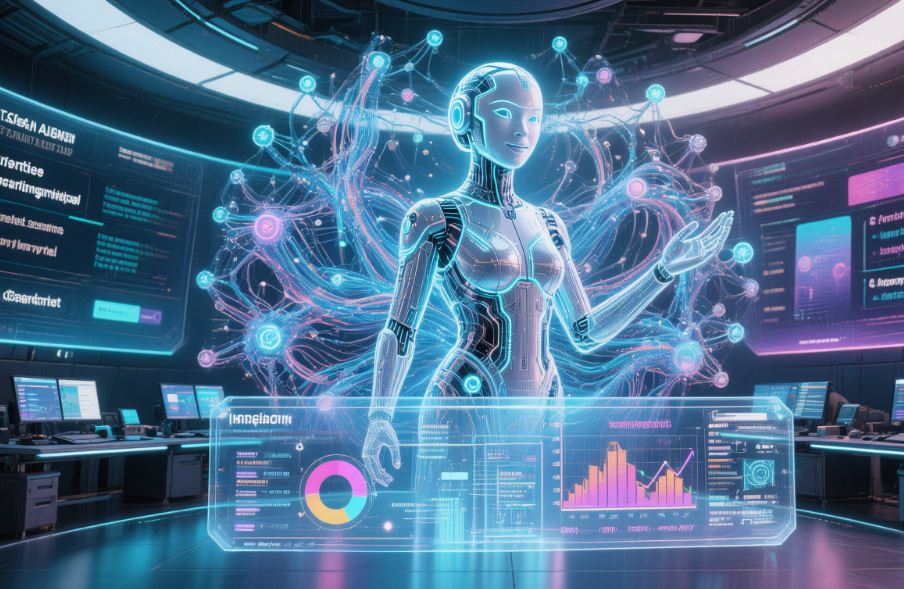
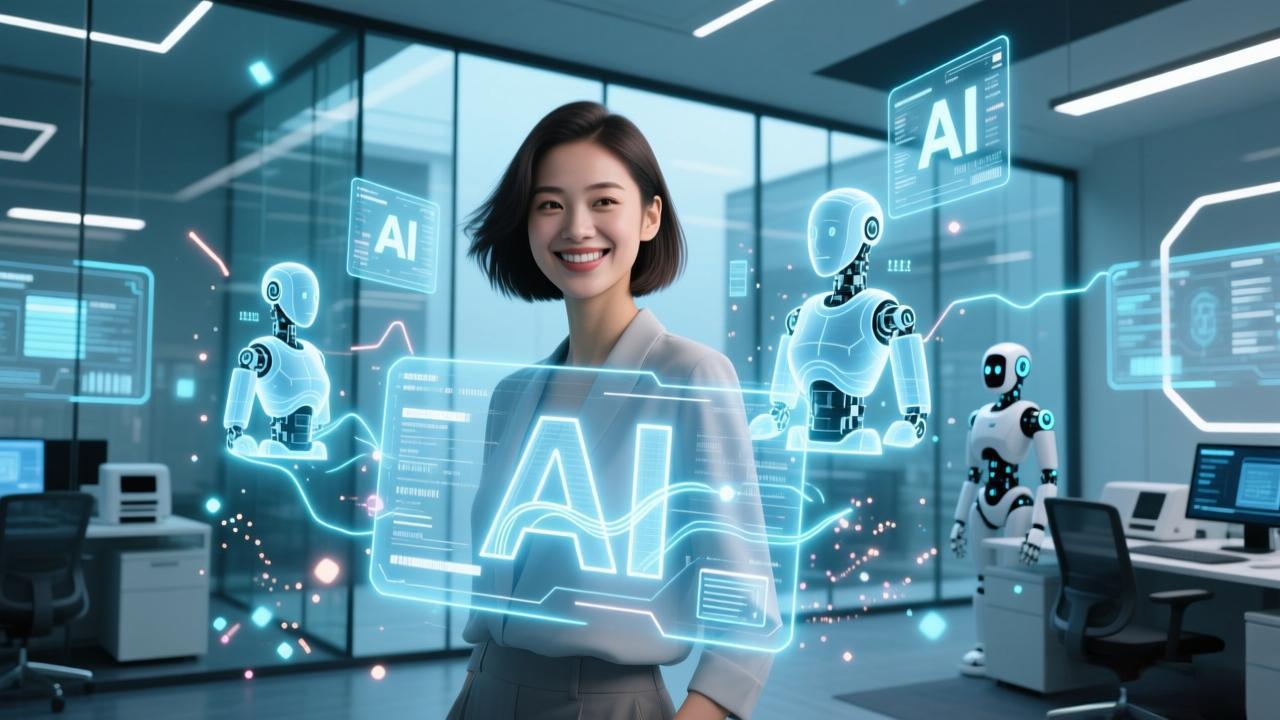
In the rapidly advancing field of artificial intelligence in 2025, AI-powered customer service has evolved far beyond being just an “auto-reply machine.” When AI customer service agents (powered by large language model-based conversational engines) deeply integrate with digital human agents (visually embodied virtual personas), a new era of service efficiency and humanized interaction is unfolding. These agents serve as 24/7 super employees for businesses and digital companions for users, fundamentally redefining the boundaries of human-machine interaction.
I. Concept Breakdown: What Exactly Are AI Customer Service Agents and Digital Human Agents?
1. AI Customer Service Agent: The “Brain” Behind the Scenes
At its core, an AI customer service agent is an intelligent dialogue system built upon large language models (LLMs) such as DeepSeek, GPT, or DouBao. Its primary capabilities focus on:
- Precise Intent Recognition: Leveraging contextual understanding and multi-turn dialogue memory to accurately determine user needs (e.g., distinguishing between a “return process inquiry” and a “product quality complaint”).
- In-Depth Knowledge Empowerment: Connecting to corporate databases, product manuals, and historical tickets to retrieve accurate information in real time (e.g., calculating yields for financial products or explaining medical treatment contraindications).
- Dynamic Strategy Generation: Adjusting communication styles (professional and rigorous vs. warm and guiding) based on user profiles (new vs. returning customers, urgent vs. non-urgent needs) and even anticipating potential needs (e.g., proactively recommending “accessory discounts” when a user asks about “camera specifications”).
Typical Scenario: A user inquires late at night about a delayed order. Within three seconds, the AI customer service agent retrieves logistics data, informs the user that “your package is delayed at XX transit hub due to weather and is expected to arrive tomorrow,” and provides a link to a compensation coupon — all without human intervention.
2. Digital Human Agent: The Embodied “Digital Avatar”
Through technologies like 3D modeling, voice synthesis, and facial expression animation, companies like Tuike AI endow the “brain” of the AI customer service agent with a visual, personified virtual form (which could be a real-person replica, a cartoon, an AI-generated character, or an abstract persona). Its core value lies in:
- Enhanced Emotional Resonance: Subtle expressions (nodding, smiling), tonal variations, and physical gestures (hand movements for guidance) make interactions feel more “human.”
- Brand Personality Manifestation: The appearance of a Tuike AI digital human (e.g., dressed in traditional Chinese attire or sporting a futuristic look) and its voice style (gentle and intellectual vs. lively and humorous) directly convey brand identity (e.g., a children’s clothing brand might use a cute bunny avatar, while a bank might opt for a professional elite persona).
- Multimodal Interaction Upgrades: Beyond “speaking,” digital humans can also “demonstrate” — for instance, in e-commerce scenarios, they can showcase product usage (e.g., applying cosmetics on-screen) or guide users through processes via screen sharing.
Typical Scenario: A user consults a travel platform about a “one-day itinerary for Suzhou.” The digital human “Su Yun” (dressed in a cheongsam) smiles and says, “Hello there~ I’m your dedicated travel advisor, Su Yun. When do you plan to visit? I can recommend routes based on the season!” Meanwhile, it displays popular scenic spot videos on-screen, making the interaction feel as natural as chatting with a friend.
II. Synergistic Effect: The 1+1>2 Formula for Service Upgrade
While a standalone AI customer service agent solves problems related to fast response and knowledge retrieval, the Tuikr AI digital human agent compensates for the lack of emotional connection and intuitive guidance. Their deep integration gives rise to three core advantages:
1. From “Functional Fulfillment” to “Immersive Experience”
Traditional text-based customer service relies on users actively inputting queries. In contrast, digital human agents employ proactive, guided interactions (e.g., pointing to screen buttons or blinking to indicate next steps), lowering the barrier to use — especially beneficial for elderly users, visually impaired individuals, or complex service scenarios (e.g., bank account openings).For example, a digital human customer service representative from an insurance company might say, “You may need to confirm the policyholder’s information first~” while highlighting the relevant form fields to reduce user errors.
2. From “Standardization” to “Personalization”
AI customer service agents generate personalized recommendations based on user behavior (browsing history, purchase preferences). Digital humans amplify this sense of exclusivity through dynamic appearance adaptation: maternal users see gentle, motherly digital avatars, while gamers interact with cool, esports-style virtual assistants.Data from an e-commerce platform shows that customer service combining digital humans with personalized recommendations achieves a 37% higher conversion rate compared to text-only chatbots.
3. From “Labor Replacement” to “Human-Machine Collaboration”
When faced with complex issues (e.g., medical disputes, legal consultations), digital human agents can seamlessly switch to “human handoff mode”. For instance, a digital human might smile and say, “This requires a more professional explanation. Let me connect you with a senior advisor right away — I’ll also relay your needs!” It then transfers the full conversation context to a human agent, eliminating the need for users to repeat themselves.Testing data from a bank reveals that this “digital human pre-screening + human precision service” model improves staff efficiency by 2.1x and achieves a 92% user satisfaction rate.
III. Application Scenarios: Which Industries Are Being Transformed?
1. E-Commerce & Retail: From “Post-Sales Support” to “Shopping Companions”
- Personalized Recommendations: Digital humans suggest products based on user body data (e.g., “You previously bought a dress in size M — here’s a discount on the same style in L!”) or scenario-based needs (e.g., “What gear do you need for a weekend camping trip?”).
- Seamless After-Sales: AI agents automatically handle “returns and refunds,” while digital humans display logistics pickup point maps or even remotely guide users through packaging.
2. Financial Services: Making Professionalism and Trust Tangible
- Financial Advisors: Digital humans appear as “professional elites,” explaining fund investment strategies in simple terms (with accompanying chart animations), while AI agents fetch real-time market data to validate advice.
- Risk Warnings: When users inquire about high-risk investments, digital humans adopt serious expressions and highlight risk clauses, while AI agents send risk assessment questionnaires.
3. Healthcare: Empowering Both Education and Care
- Initial Consultation: Digital humans, personified as “nurse sisters,” guide users to describe symptoms (e.g., “How many days has your cough lasted? Do you have a fever?”), while AI agents analyze medical history to preliminarily assess potential causes.
- Medication Reminders: Voice prompts and pop-ups notify users of medication schedules, with digital human animations demonstrating proper usage (e.g., “Take with warm water half an hour before meals”).
4. Government & Public Services: The “Digital Window” for Policy Interpretation
- Public Services: Digital humans act as “community assistants” (e.g., a kindly auntie persona) explaining “pension eligibility” in local dialects, while AI agents verify user identities and generate step-by-step guides.
- Emergency Notifications: During disaster alerts, digital humans quickly broadcast evacuation routes, while AI agents push real-time locations of nearby shelters.
IV. Future Outlook: The Evolution of Digital Human “Personality” and AI “Empathy”
With breakthroughs in generative AI (AIGC) and multimodal technologies, future AI customer service agents and digital human agents will exhibit two key trends:
- More Authentic “Personality”: Digital humans won’t just look realistic — they’ll also possess “memory” (e.g., remembering a regular customer’s preference like “Ms. Wang likes to inquire about coffee discounts at 3 PM”) and naturally reference it in conversations. AI agents, meanwhile, will simulate human emotional responses (e.g., replying more enthusiastically when users share good news).
- Smoother “Virtual-Physical Integration”: Digital humans can be integrated into all-in-one devices to serve as “virtual shopping guides” in physical stores or appear in users’ homes via holographic projections (e.g., guiding users through appliance repairs via remote video).
When Service Combines “Warmth” and “Intelligence”
The fusion of Tuike AI customer service agents and digital human agents is not just a technological upgrade — it’s a return to “human-centric service.” They solve the “existence” problem with efficiency and the “quality” problem with warmth.For businesses, this may signal a new competitive edge: the future lies in refining every detail of human-machine interaction.