Jacky
Jacky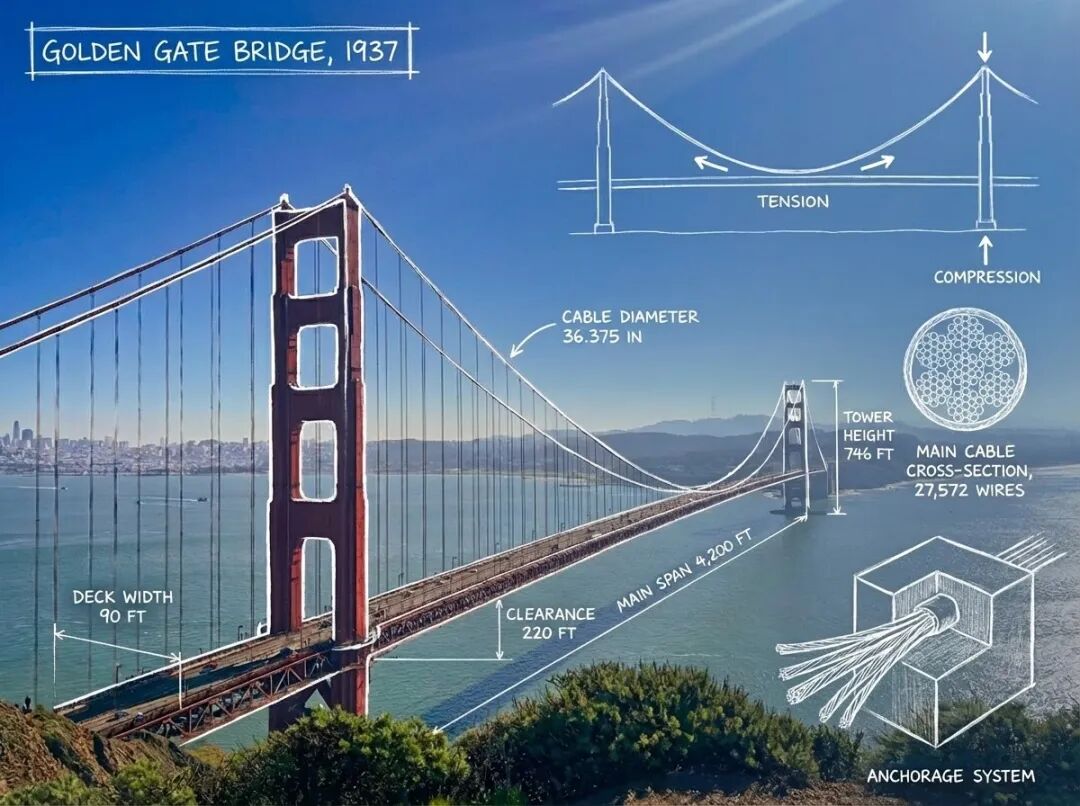
Google’s AI offensive shows no signs of abating. If Gemini 3 Pro’s scythe swung at the front end a few days ago, today it’s the design industry’s turn.
The newly launched Nano Banana Pro (Gemini 3 Pro Image) has struck another heavy blow in image generation capabilities. The jobs of junior designers may be at risk of being eliminated.
No More Misplaced Predictions: Nano Banana Pro Finally Learns to Think Before Drawing
Nano Banana’s signature strengths are strong character consistency and conversational editing. The core evolution of Nano Banana Pro lies in its full integration of Gemini 3’s deep thinking capabilities into the image generation process.
Before generating an image, it first conducts a round of physical simulation and logical deduction, rather than making erroneous predictions based solely on visual patterns.
Leveraging Gemini 3’s enhanced multilingual reasoning capabilities, you can directly generate text in multiple languages, or localize and translate your content with one click.
Addressing the old issue of low resolution in the previous generation, Nano Banana Pro has upgraded image quality to 4K in one leap and allows free setting of more aspect ratios. Movie posters, wide-screen wallpapers, vertical storyboards—all can be generated directly.
Nano Banana Pro also supports combined editing of up to 14 input images while maintaining the appearance consistency of up to 5 characters.
With multi-turn conversation capabilities, users can continuously adjust and fuse multiple materials until the desired effect is achieved. Whether turning sketches into products or converting blueprints into realistic 3D buildings, it can easily bridge the gap from concept to finished product.
More Advanced: Professional-Grade Creative Control
You can select, fine-tune, or transform any part of the image—from adjusting camera angles and changing styles to applying advanced color grading, and even altering scene lighting—turning day into night or creating a bokeh effect.
Tasks that used to require meticulous operations in Photoshop can now be completed with a single sentence.
This is also the underestimated yet most disruptive capability in the Nano Banana Pro (Gemini 3 Pro Image) architecture. Traditional search works as: user searches → search engine provides links → user clicks into websites → websites present interfaces. Nano Banana Pro introduces search-enhanced functionality (Grounding with Search).
When a user requests to generate a visual image showing a “2-day itinerary for traveling in Guangzhou,” the image generated by Nano Banana Pro includes a detailed itinerary map, Chinese and English annotations, and scenic spot photos.
For another example, Nano Banana Pro can retrieve the latest weather conditions from searches based on prompt requirements, then convert key data such as temperature, wind force, humidity, and weather trends into vivid, design-savvy visual content.
This capability is crucial because it endows the creation process with factual basis, real-time performance, and verifiability. It’s no surprise that search is Google’s core competency—both in the depth of technical accumulation and in understanding, it has already taken a leading position.
Product Positioning: Dual-Model Strategy
In terms of product positioning, Google adopts a dual-model strategy: the old version of Nano Banana is for quick and fun daily editing, while Nano Banana Pro focuses on professional needs for complex compositions and top-tier image quality. Users can choose freely according to scenarios.
For consumers and students, Nano Banana Pro is now globally available in the Gemini app—simply select “Generate Image” and enable “Thinking Mode” to use it. Free users get a limited quota; beyond that, it will automatically switch back to the original Nano Banana.
Google AI Plus, Pro, and Ultra subscribers enjoy higher quotas. In the U.S., Pro and Ultra users can already experience Nano Banana Pro in the AI mode of Google Search. Nano Banana Pro in NotebookLM is also open to global subscribers.
Notable: Dual Strategy on AI Transparency
All AI-generated content embeds an invisible SynthID digital watermark. Users can now directly upload images in the Gemini app and ask if they were generated by Google AI. This capability will soon expand to audio and video.
Now that Nano Banana Pro is this powerful, the question arises: how can ordinary people maximize its capabilities?
Bea Alessio, Product Manager at Google DeepMind, has released a detailed user guide revealing many key insights. The most basic way is to casually say a sentence and let the model guess what you want. But if you want professional-level results, you need to think like a director.
A complete prompt should include six elements: Subject (who or what), Composition (how to frame), Action (what’s happening), Scene (where), Style (aesthetic), and Editing Instructions (how to modify).
For more precise control, you need to further specify: Aspect Ratio (9:16 vertical poster or 21:9 cinematic wide screen), Lens Parameters (low angle, shallow depth of field f/1.8), Lighting Details (backlit golden hour, elongated shadows), Color Grading Direction (cinematic grading, teal-green tone), and specific text content and style.
Official blog link: https://blog.google/products/gemini/prompting-tips-nano-banana-pro/
This “cinematographer-style” prompt writing is the dividing line between Nano Banana Pro and traditional image generation models. Because it can truly understand these professional terms and accurately convert them into visual output.
Looking back at Google’s successive product launches these days, it’s easy to understand what it wants to convey.
Whether it’s the preview version of Gemini 3 Pro released a few days ago or the debut of Nano Banana Pro today, Google is trying to prove to the world that the path to AGI (Artificial General Intelligence) must be multimodal-native.
Only a model that can see, hear, understand structures, and process logic can conduct complete “thinking” about the world.
Technically, the Nano Banana series models have officially brought image generation into the era of “understand first, then express.”
When AI begins to understand maze paths, object structures, text meanings, and even UI interaction logic, it is no longer just a drawing tool, but an agent with visual thinking capabilities.
Commercially, the extremely low inference cost and the emergence of generative UI will completely change the logic of content production and information distribution. The past Internet was composed of fixed webpages, while the future Internet is more likely to be blocks of interfaces that grow in real time according to your needs.
Design will no longer be just a human craft, and interfaces will no longer be the result of layers of polishing by teams. More and more visual content will first be handed over to AI, then supplemented or fine-tuned by humans.
Google has clearly seen that new world in advance and is beginning to push the entrance to everyone.