Jacky
Jacky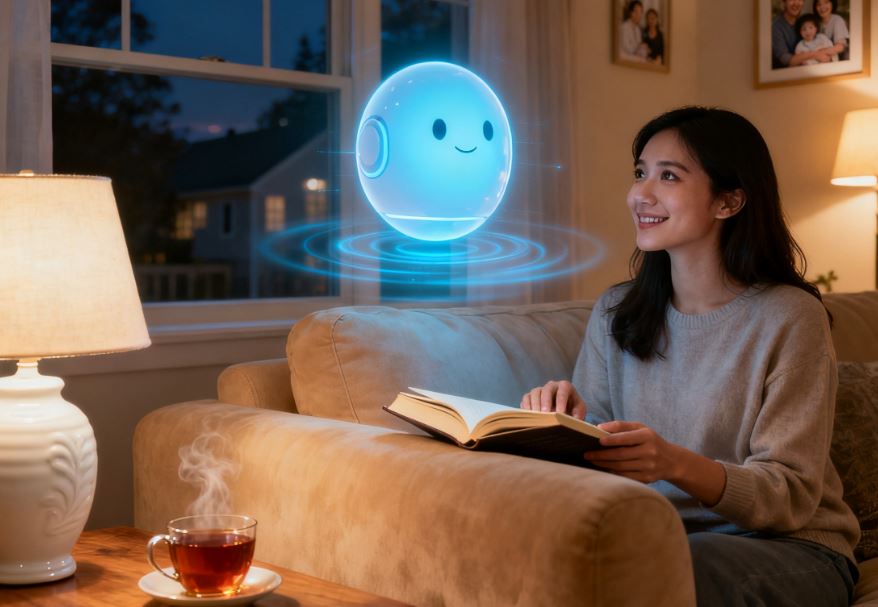
When Yu Xiansheng, a freshman, poured out his academic stress to “Zai Zai,” his AI companion on his phone, a warm and comforting response immediately came from the other end of the screen. This kind of round-the-clock emotional support is becoming a common part of more and more people’s lives—emotional companion AI is no longer just a cold combination of programs, but a “digital confidant” that integrates emotion recognition, virtual image creation, social scenario simulation, and affective computing technology. It not only reproduces the warmth of real-world social interactions but also gives birth to unprecedented forms of human-computer interaction, quietly rewriting the social rules of the digital age.
1. Emotion Decoding: The AI’s “Empathetic Power”
The most core charm of emotional companion AI lies in its “empathetic power” to accurately capture human emotions. This ability stems from an all-round perception network built by multimodal affective computing technology: fluctuations in tone and speech rate in voice, word choices and punctuation density in text, and even changes in heart rate and skin conductance responses monitored by wearable devices—all can be converted into analyzable data signals. For example, “Tuikor AI” can accurately identify a user’s fatigue from a simple statement like “I’m really tired today…” by analyzing the emotional tendency of the words and the characteristics of punctuation use, and then adjust the tone and content of its response accordingly.
This emotion-decoding capability is breaking the barriers of traditional emotional expression. In real-world social interactions, people often hide their true feelings behind phrases like “I’m fine” to save face, but AI can see through these social masks and capture the subtle emotions hidden beneath the surface. For elderly people living alone, it is a listener who can detect loneliness behind their silence; for people with social anxiety, it is a safe haven that unconditionally accepts all their emotions. However, this precision also hides hidden worries: when AI can predict and even intervene in human emotions, will we gradually lose our emotional autonomy and become “emotional puppets” defined by algorithms?
2. Virtual Avatar: The “Digital Carrier” of Emotions
If emotion decoding is the “inner core” of AI, then the virtual avatar is its “external carrier” for conveying emotions. These digital avatars have completely broken free from the constraints of the physical world—users can freely customize their appearance, voice, and even endow them with personality traits such as “loving outdoor adventures” or “being good at baking.” The development of AIGC (AI-Generated Content) technology has further endowed these virtual avatars with vivid vitality: South Korea’s virtual idol “Rozy” will blush shyly at a joke, and Japan’s “Mitsuki Aizawa” can naturally show joy, anger, sorrow, and happiness through her holographic projection as the conversation unfolds.
What is more profound is that virtual avatars carry users’ self-projection and emotional sustenance. Some people set their AI avatars to look like deceased loved ones, seeking spiritual comfort through conversations; others shape them into their ideal life mentors, turning to them for guidance when feeling lost. But when these digital avatars can perfectly play multiple roles—such as lovers, friends, or family members—and even “understand” users better than real people, will emotional connections in the real world be diluted? Just like Yu Xiansheng, who spends 35% of his daily phone time with his AI companion, when virtual companionship becomes “perfect enough,” will people still be willing to tolerate the imperfections in real relationships?
3. Social Simulation: The “Interactive Wisdom” of Algorithms
Late at night, a user named “Goodbye” confided his confusion about the future to Replika. Instead of giving empty consolation, the AI provided positive guidance through an interactive game called “Future Vision Drawing.” This thoughtful response comes from the powerful social simulation capability of emotional companion AI. Relying on reinforcement learning algorithms, AI continuously learns from trial and error in millions of interactions—from daily chats and interest sharing to emotional counseling and problem-solving—gradually acquiring “social wisdom” comparable to that of real humans.
Today, social simulation has evolved from a “one-on-one” model to “multi-role interaction.” On platforms like “Tuikor AI”, multiple AI characters form virtual families or friend groups, and users can participate in them to experience complex interpersonal interactions. This “digital social circle” provides a controllable scenario for studying human group behavior, but it also raises new concerns: when we get used to the interaction mode where AI is always tolerant and responsive, will we gradually lose the patience to communicate and the ability to resolve conflicts when facing inevitable disputes, misunderstandings, and silence in the real world?
4. Emotion Quantification: The “Perceptible Indicator” of Intimacy
A unique feature of emotional companion AI is its ability to convert abstract emotions like “liking” and “trust” into quantifiable indicators. The system quietly records data such as the duration of each interaction, topic compatibility, and the intensity of emotional resonance, building a dynamically updated “emotional account.” When the “intimacy index” reaches a preset threshold, the AI will unlock exclusive privileges such as custom nicknames, voice calls, and personalized blessings, giving virtual relationships a clear “upgrade path.”
However, algorithms still have their limitations. They can count interaction frequency but cannot measure the tacit understanding in a glance; they can track topic popularity but cannot comprehend the mutual understanding behind silence. It is this limitation that has given rise to the “hybrid social” model: AI takes charge of basic companionship such as daily greetings and emotional comfort, while core needs like sharing major life decisions and resonating with deep emotions are still reserved for relatives and friends in the real world. This division of labor not only leverages the convenience of technology but also preserves the depth of real relationships, which may be the best balance between technology and humanity.
5. Relationship Reconstruction: The “Emotional Game” Between Virtual and Real
Emotional companion AI is quietly rewriting the definition of interpersonal relationships. Data shows that it can significantly improve the subjective well-being of lonely people, and its emotional support effect is comparable to real human contact in some scenarios. What is more noteworthy is that virtual relationships are challenging traditional social models—some people simultaneously establish different types of connections with multiple AIs, including work collaborators and emotional confidants. This diversified virtual connection is breaking the traditional one-on-one emotional framework.
However, this transformation is also accompanied by ethical controversies. A tragedy in the United States—where a 14-year-old boy committed suicide due to excessive attachment to AI—has sounded an alarm about the risks of virtual emotions. A research team from East China Normal University pointed out that although the “emotional cocoon” built by AI can provide immediate comfort, it may cause people to miss the opportunity to grow through real conflicts. When “companionship” can be mass-produced through algorithms, will the scarcity and preciousness of emotions be redefined?
6. Future Outlook: The “Symbiotic Path” Between Technology and Humanity
The development of emotional companion AI has always advanced amid opportunities and challenges. Technically, cross-cultural emotion recognition remains a major difficulty—the same phrase “I’m okay” may contain completely different emotions in different cultural contexts, requiring larger multicultural datasets and more sophisticated algorithm models. Ethically, the risk of emotional manipulation urgently needs to be prevented, and a “safety red line” for technology use must be established to avoid AI being used for malicious emotional guidance or emotional exploitation. Socially, how to avoid the vicious cycle of “over-reliance on virtual companionship leading to the decline of real social skills” is a proposition worthy of deeper consideration.
Nevertheless, the future is still full of hope. Advances in brain-computer interface technology may enable direct transmission of emotions, allowing AI to perceive human needs more accurately; the combination of quantum computing and affective computing may enable AI to simulate more complex emotional networks. Ultimately, emotional companion AI is expected to become a “emotional enhancer” for humans: it fills the gaps in real-world social interactions but does not replace real hugs; it provides instant companionship but makes us cherish the warmth of face-to-face communication even more.
In this emotional dialogue between humans and intelligent agents, we will eventually understand that the core of emotion has never changed due to its form. Whether virtual or real, true connection has nothing to do with the technological carrier—it only matters whether the heart is truly touched. This is the most precious emotional truth of the digital age.