Jacky
Jacky
As an observer focusing on the global technology field, over the past few years, I have witnessed the AI social industry evolve from a niche attempt to a mainstream competitive battlefield.
But 2026 is different — this year, AI is no longer just a “feature” of social platforms, but has become the core pillar for us to connect, collaborate, and even compete with each other.
From global tech giants launching ambitious social ecosystems to startups in the industry redefining cross-cultural interaction, the AI social circle in 2026 is full of innovative vitality, competitive games, and lingering unresolved questions about privacy, authenticity, and the future of human connection.
Major Opening Move: Tencent Yuanbao Pai Rewrites the AI Social Interaction Model
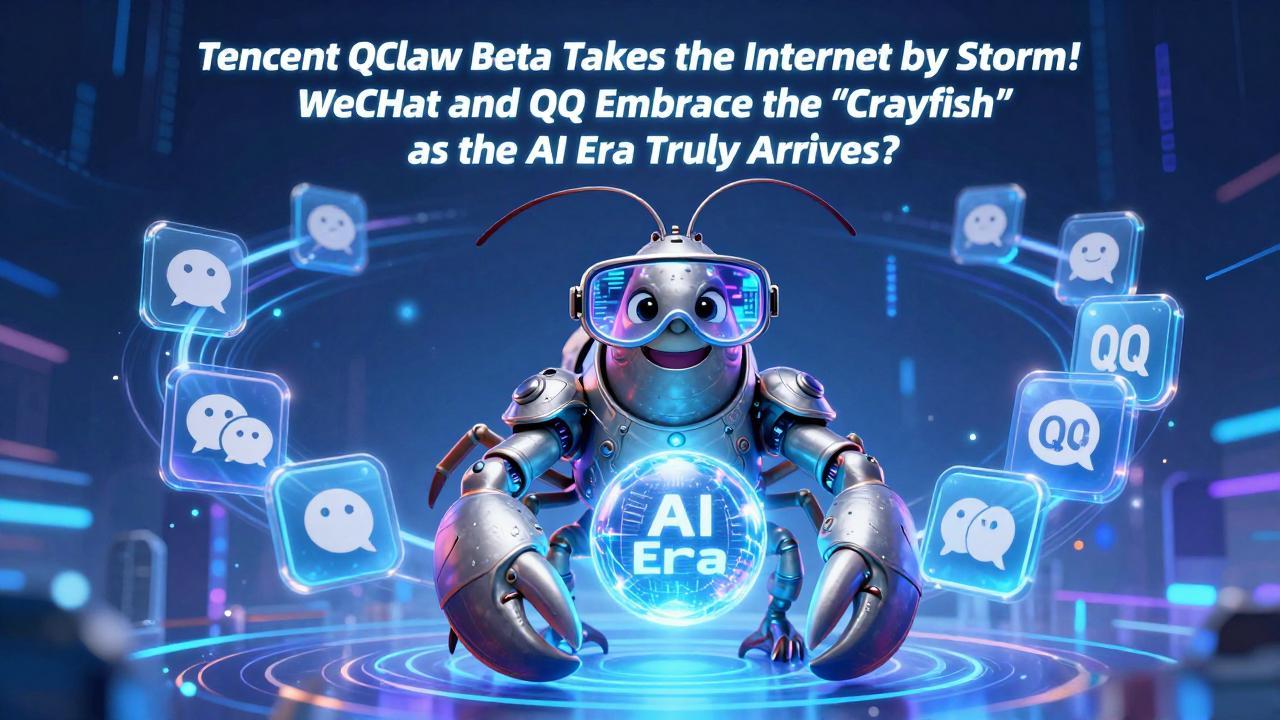
In late January this year, tech giant Tencent quietly launched the closed beta of “Yuanbao Pai”, a brand-new AI social feature under its popular AI assistant “Yuanbao”, kicking off the year with a bang.
For those of us who pay attention to the global AI field, this move is by no means a simple product update — as Tencent defines it, it clearly marks that the industry is transforming from “one-on-one tool-based AI” to “multi-scenario social AI”.
Unlike traditional AI assistants that passively respond to individual commands, Yuanbao Pai positions AI as an active “social partner” in group scenarios, constructing a triangular interaction model of “user-AI-user”, which is in sharp contrast to the two-way “user-AI” loop we have long been accustomed to.
Even from the perspective of the global AI field, what makes Yuanbao Pai noteworthy is its in-depth integration with Tencent’s existing social ecosystem — WeChat and QQ, platforms with billions of users worldwide.
Users can create or join “Pai” (themed groups) for families, fitness, reading and other interests, and then directly share invitations to WeChat Moments or QQ, solving the long-standing “cold start” problem that plagues most AI social products.
In these groups, Yuanbao AI plays the role of a coordinator: it summarizes long conversations to solve the problem of information overload, manages group activities such as check-ins and challenges, and even provides personalized services according to the group’s theme — from folk custom inquiries to restaurant recommendations, and so on.
Tencent is not stopping here; future updates will add “watch together” and “listen together” features, leveraging its Tencent Meeting audio-visual technology to realize immersive shared experiences such as synchronized movie nights and music sessions.
Red Envelope War Breaks Out: The User Battle for AI Social
To promote user popularization, Tencent has gone all out. On January 26, at Tencent’s 2026 Employee Conference, CEO Pony Ma announced a 1 billion yuan (approximately $139 million) cash red envelope campaign for Yuanbao, clearly stating his goal of “reproducing the glorious moment of WeChat red envelopes 11 years ago”.
For observers in the global AI field who are familiar with the rise of WeChat, this statement is of great significance: in 2015, WeChat’s Spring Festival red envelope campaign promoted WeChat Pay to quickly become mainstream, binding hundreds of millions of users to the platform.
Today, Tencent is betting that the universal appeal of AI combined with holiday benefits can replicate that miracle for AI social. This is a bold gamble, and it has already triggered a chain reaction of competition — Baidu quickly announced a 500 million yuan red envelope campaign for its Wenxin AI assistant, while ByteDance’s Volcano Engine partnered with China National Radio to promote its AI social features through the 2026 Spring Festival Gala.
From our perspective, this “red envelope war” is more than just a marketing tactic; it is a competition to convert ordinary AI users into loyal participants of social platforms, a challenge that global AI tech companies such as Meta and OpenAI have also struggled to overcome.
Another Major Trend: AI Agents Break Global Social Barriers
While Tencent is grabbing headlines with its ecological layout, another major trend of AI social in 2026 — a trend closer to the lives of global users — is the rise of AI Agents in global social interaction.
Different from Yuanbao’s group-oriented model, AI Agents are autonomous learning systems that can act as personal representatives to break cross-cultural and cross-platform barriers for users and enterprises. As of the beginning of 2026, the global AI Agent market size is expected to reach $62 billion, among which social media has become the fastest-growing application field, especially favored by enterprises focusing on global business.
The global AI startup circle has kept up with this trend, launching products such as Boardy — an AI Agent platform for professionals in venture capital, technology and other industries, acting as a “super connector”.
Unlike cold emails or random professional social messages, Boardy’s AI digs into users’ real needs through voice interaction, and then matches them with potential contacts — transforming “people looking for people” into “AI matching the right people”. For entrepreneurs and professionals hoping to go global, this is undoubtedly a revolution; it eliminates the uncertainty in cross-cultural social interaction and makes international collaboration much more efficient.
In many regional markets around the world, especially in Southeast Asia and the Middle East, AI Agents are completely changing the way users connect. Indonesian social platform PopUp launched an AI “doppelgänger” feature that can create digital avatars of users, simulate conversations with potential matches to test compatibility, and generate localized icebreakers — this feature has increased the daily deep conversation rate by 37%.
For global enterprises hoping to enter these fast-growing markets, AI Agents have become an indispensable tool: they can generate content in more than 100 languages, adapt it to local cultural customs (such as avoiding religious taboos in the Middle East), and manage multi-platform social accounts 24/7, reducing labor costs by up to 80% for some brands.
This also reminds us that AI social is not only about connection between people — but also about connection between enterprises and people, and is the key to breaking the geographical barriers that have long restricted the development of global social platforms.
Hidden Worries Emerge: The Dilemma Between Convenience, Authenticity and Privacy
But despite continuous innovation, 2026 has also exposed the cracks behind the AI social revolution — these cracks, from the perspective of the global AI field, are the same as those seen in various markets. What is the biggest challenge? It is to find a balance between AI convenience and human authenticity.
Early tests of Tencent’s Yuanbao Pai and Baidu’s Wenxin group chat AI have exposed obvious flaws: Baidu’s multi-AI system is difficult to grasp context, often giving irrelevant responses and even causing disputes; while Tencent’s “universal AI” has been criticized by some users as a mere “entertainment tool” that not only fails to add value to group chats, but also creates chaos.
Even in other global AI markets, ChatGPT’s early attempt at group AI features failed because its technology was too “perfect” — its ability to remember every detail and give flawless responses disrupted the natural ebb and flow of human conversation, and it is this imperfection and imbalance that are precisely the charm of human conversation.
As a tech analyst said: “True AI social interaction is not about human-AI conversation — but about AI being a bridge between people.” So far, no platform has perfectly grasped this balance.
Privacy is another imminent concern — a point that resonates strongly with global users who are increasingly vigilant about tech companies collecting and using their data.
By their very nature, AI social platforms need to access a large amount of personal information: chat histories, social preferences, and even emotional cues — to function effectively. Tencent’s Yuanbao Pai, which is deeply integrated with WeChat’s massive user data, has been questioned about the storage method of its group chat information and user preferences, as well as its data security protection measures.
Under the global AI regulatory framework, AI Agent platforms such as Boardy must comply with strict privacy regulations such as the California Consumer Privacy Act (CCPA) and the General Data Protection Regulation (GDPR), but as technology continues to develop, regulators are struggling to keep up.
The risk is obvious: if users do not trust AI to protect their data, no matter how convenient it is, they will not allow it to enter their social lives.
Looking Ahead to 2026: Where is the Future of AI Social Heading?
Looking ahead to the rest of 2026, the upsurge of competition in AI social shows no sign of abating. Tencent is expected to officially launch Yuanbao Pai in the coming months, while rumors have it that Meta is testing its own AI-powered group social feature, leveraging its Instagram and Facebook ecosystems to compete with Tencent and global AI startups.
The intelligence level of AI Agents is expected to further improve, with better emotional intelligence and cross-platform integration capabilities, making global social interaction smoother. But core questions remain: Can AI truly enhance human connection, or will it dilute it? Can tech companies find a balance between innovation, privacy and authenticity?
As an observer focusing on the global AI field, I believe 2026 is a crucial year — it is not only vital to the AI social industry, but also determines the way we connect in the future.
We are no longer wondering whether AI should enter our social lives; instead, we are thinking about how to make AI serve us, not against us. Tencent’s Yuanbao Pai, AI Agents from the global AI startup circle, and countless startups in between are all trying to find the answer.
Although some attempts will fail, others will eventually redefine the connotation of “social” in the digital age. It is certain that 2026 is not only a year of transformation for AI social — but also a year when the industry matures, and the choices we make now will affect the way humans connect for decades to come.