Jacky
Jacky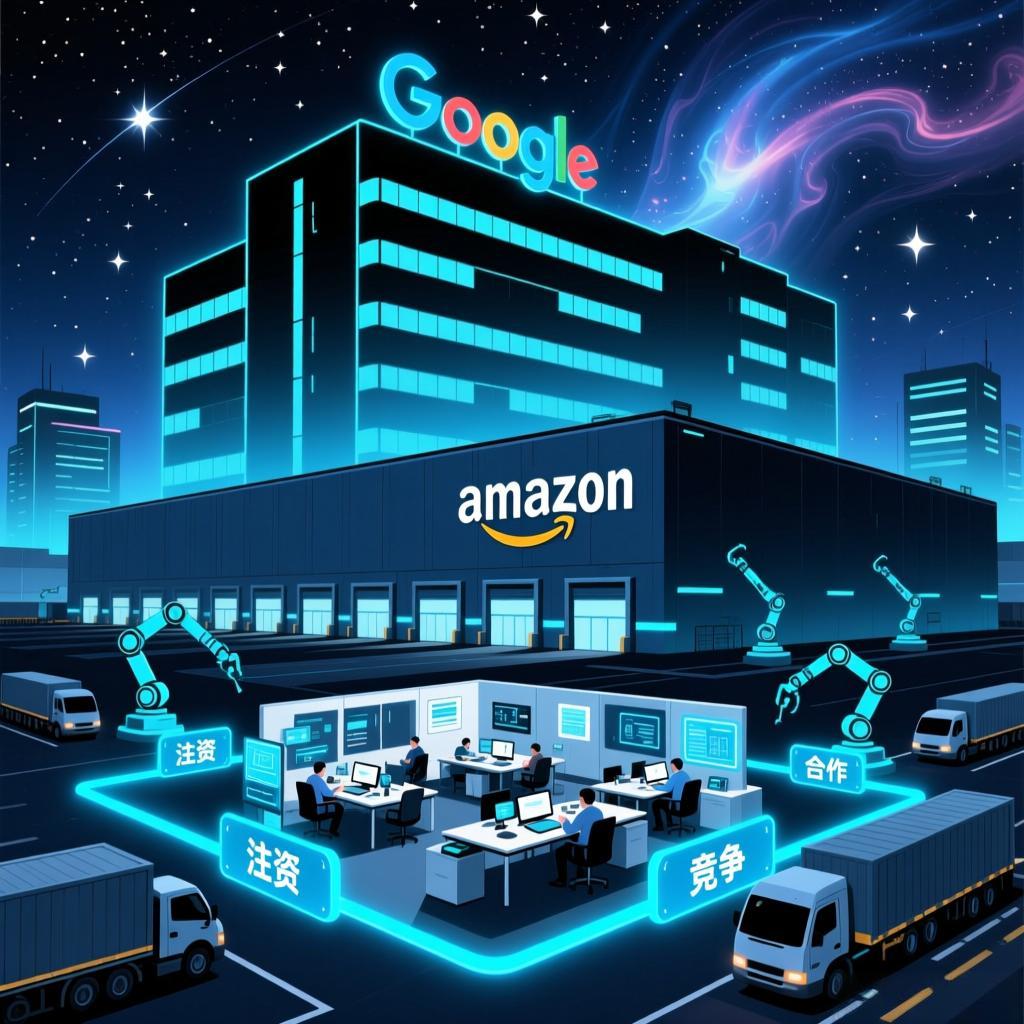
Recently, U.S.-based AI startup Anthropic completed its Series F financing round of $13 billion, with a valuation soaring to $183 billion. Leading investors include top institutions such as Fidelity and Lightspeed Venture Partners, as well as sovereign wealth funds from Qatar and Singapore. This financing scale and valuation data are sourced from Anthropic’s official announcement, which explicitly mentions that the round was co-led by ICONIQ, Fidelity, and Lightspeed Venture Partners, highlighting global capital’s recognition of its technical route. This is not the first time Anthropic has sparked a capital frenzy—previously, Google invested $300 million for a 10% stake, and Amazon not only provided cloud service support but also formed a deep strategic partnership. From passively receiving investments to being chased by giants, Anthropic’s rise is no accident; it reflects the in-depth logic of the global AI industry shifting from “solo combat” to “ecosystem integration.” This article will take you through Anthropic’s capital cooperation journey, analyze its core technical value, and interpret the competitive landscape and development trends of the current AI large model industry.
Anthropic’s Capital Journey: From Startup to $100 Billion Valuation
Founded in 2021 by Dario Amodei and Daniela Amodei, former VP of Research at OpenAI, Anthropic had “top-tier genes” from the start. Unlike giants like Meta that pursue active acquisitions, Anthropic has taken a differentiated path of “attracting capital through technology and strengthening technology with capital” relying on its unique technical route. Its development process can be roughly divided into three key phases.
The first phase was technical foundation building and initial financing. At its establishment, Anthropic established the AI R&D direction of “reliability, interpretability, and controllability.” Most core team members have participated in the R&D of GPT-2 and GPT-3 models, and their technical strength has been widely recognized. From 2022 to early 2023, the company successively completed Series A and B financings, raising $124 million and $580 million respectively, laying the capital foundation for basic model R&D. During this phase, Anthropic’s core goal was to build technical barriers. Its proposed “Constitutional AI” framework solves the safety problem of AI output by allowing the model to self-correct in accordance with preset ethical guidelines, becoming a core differentiator from OpenAI.
The second phase was the entry of giants and ecosystem integration. In February 2023, Google took the lead in extending an olive branch, investing $300 million for a 10% stake. Anthropic’s Claude series models were thus integrated into Google Cloud’s Vertex AI platform, enabling technical implementation and scenario expansion. In August of the same year, South Korea’s SK Telecom added a $100 million investment to strengthen its AI layout in the telecommunications sector. In 2024, Amazon became a key partner; it not only included the Claude 3 Sonnet model in the Amazon Bedrock service but also reached a multi-billion-dollar tripartite agreement with NVIDIA and Anthropic in 2025—Microsoft invested $5 billion, NVIDIA invested up to $10 billion, and Anthropic committed to purchasing $30 billion in Azure cloud computing capacity. This deep integration of “capital + computing power + scenarios” has completely lifted Anthropic out of the resource constraints of a startup.
The third phase was valuation surges and industry competition. In May 2025, Anthropic launched Claude Opus 4 and Claude Sonnet 4. Among them, Opus 4 achieved an excellent score of 72.5 in the SWE-bench software engineering test, and its ability to focus on open-source code refactoring for 7 consecutive hours marks the evolution of AI from an “instant response tool” to a “full-cycle project collaborator.” This test result has been included and verified by authoritative technical platforms such as Tencent Cloud Developer Community. Technological breakthroughs directly drove market recognition; the $13 billion Series F financing completed in September increased its valuation by 44 times compared to $4.1 billion in 2023, making it one of the world’s most valuable AI startups. Relevant data has been reported both in Anthropic’s official announcement and financial media such as Securities Times. At this point, Anthropic has transformed from a “giant partner” to an “industry rule influencer,” forming a tripartite balance of power with OpenAI and Google Gemini.
It is worth noting that Anthropic has always adhered to the bottom line of “technical independence” in its capital cooperation. Faced with a merger offer and CEO position invitation from OpenAI, founder Dario Amodei explicitly refused; in cooperation with Google and Amazon, it has always maintained the independence of core technology R&D. This strategy of “cooperation without dependence” allows it to obtain resource support while maintaining the autonomy of its technical route, which has become the key to attracting continuous capital injections.
Claude Series: The Core Competitiveness Engine of Anthropic
Behind Anthropic’s soaring valuation, the Claude series models are undoubtedly the core support. From its first release in March 2023 to the launch of the Claude 4 series in 2025, this product has become a global AI product with over 100 million users through continuous iterative performance and differentiated positioning. Its core advantages are concentrated in three aspects.
First, it leads the industry in safety and controllability. Based on the “Constitutional AI” framework, the Claude series models can effectively filter harmful information and perform prominently in fields with high compliance requirements such as healthcare and finance. For example, in financial consulting scenarios, Claude can accurately identify the boundary of risk prompts, providing professional advice while avoiding compliance risks, making it a cooperative choice for institutions such as Goldman Sachs and Morgan Stanley. This safety advantage has given it significant competitiveness in the enterprise market—as of 2025, more than 300,000 enterprise customers worldwide have adopted Claude as an internal collaboration tool, and the number of large customers with annual payments exceeding $100,000 has increased nearly 7 times compared to the previous year. This data is sourced from Anthropic’s officially disclosed operating report.
Second, it has outstanding performance iteration speed and scenario adaptability. The Claude 2 released in July 2023 achieved a breakthrough of 200K context window, capable of processing entire books or long reports at once; the Claude 3.5 Sonnet in 2024 doubled the processing speed compared to the previous generation while reducing costs to one-fifth, surpassing GPT-4o and Google Gemini 1.5 Pro in multiple tests such as visual reasoning, programming, and mathematics. The Artifacts feature launched in 2025 has built a dynamic workspace where users can edit and integrate AI-generated code and documents in real time, realizing a full-process closed loop of “generation – optimization – implementation” and greatly improving work efficiency. According to actual tests by technical communities such as CSDN Blog, the completion efficiency of Claude 4 series models in complex programming tasks is more than 40% higher than the industry average.
Third, it has strong multimodal capabilities and ecosystem compatibility. The Claude series not only supports multimodal interactions such as text, images, and audio but also is deeply compatible with mainstream cloud platforms and enterprise systems. Through cooperation with Amazon Bedrock and Google Cloud, Claude can seamlessly integrate into enterprises’ existing IT architectures, reducing migration costs; for the consumer end, its launched iPhone app and web version cover diverse scenarios such as chatting, creation, and learning, with global monthly active users exceeding 120 million. This “full-scenario coverage” capability enables it to serve complex enterprise-level needs while seizing consumer market share.
AI Large Model Industry: From Technical Competition to Ecosystem Warfare
Anthropic’s rise and capital pursuit are essentially a microcosm of the escalating competition in the global AI large model industry. In 2025, as technology matures, industry competition has shifted from a single contest of model performance to a comprehensive ecological competition of “technology + computing power + scenarios + capital.”
The explosive growth of the market scale is the core driving force behind capital frenzy. According to the “Worldwide Artificial Intelligence and Generative AI Spending Guide” released by International Data Corporation (IDC), the global generative AI market size is expected to grow from a $100 billion scale in 2024 to $607.1 billion in 2029, with a five-year compound annual growth rate (CAGR) of 56.3%, accounting for nearly half of the global total AI investment scale. Among them, the proportion of enterprise-level AI applications will increase from 45% in 2024 to 62% in 2030, with finance, healthcare, and manufacturing becoming core landing scenarios. This segmented data is sourced from Counterpoint Research’s industry report. The reason why Anthropic can attract giants to compete for investment is precisely because its technical route accurately meets the compliance and performance needs of the enterprise market.
The current industry has formed a clear competitive landscape: the first echelon consists of OpenAI and Anthropic, which dominate the high-end market with leading model performance and technical barriers; the second echelon includes Google (Gemini) and Microsoft (Copilot), which realize in-depth integration of “model + scenarios” relying on their own ecological advantages; the third echelon consists of local players such as Baidu ERNIE Bot and ByteDance Doubao, which are rapidly breaking through in regional markets and vertical scenarios. It is worth noting that “cross-border cooperation” and “cross-border competition” coexist among giants—Amazon is both an investor in Anthropic and a cloud service customer of OpenAI; Google promotes its own Gemini while supporting Claude’s landing, making industry boundaries increasingly blurred.
As the birthplace of AI technology, the United States has always occupied a dominant position in the industry. According to IDC data cited by China Business News, in addition to Anthropic, AI startups focusing on vertical fields such as Scale AI and Wayve have also become targets of giant acquisitions. The merger and acquisition (M&A) volume of the U.S. AI industry exceeded $50 billion in 2025, an increase of 83% compared to 2024. At the policy level, the United States has increased investment in AI computing power infrastructure through the “CHIPS and Science Act” and jointly formulated AI ethical guidelines with the European Union, attempting to dominate global industry standards. This coordinated advantage of “technology + capital + policy” has allowed U.S. AI companies to occupy a leading position in global competition, with their global market share remaining above 55% for a long time.
However, the industry still faces many challenges. Technically, the “hallucination problem” and “long-context processing shortcomings” of large models have not been fully resolved, and high computing power costs also restrict large-scale implementation; commercially, the ROI (Return on Investment) in some scenarios is lower than expected, and enterprise payment willingness still needs to be cultivated; ethically, issues such as data privacy protection and AI liability definition lack global unified standards, which may trigger regulatory risks. Although Anthropic leads in safety, it also faces the challenge of balancing “strict compliance” and “functional flexibility.”
Conclusion: The Next Decade of the AI Industry Depends on Ecosystem Endurance
Anthropic’s growth from a startup to a $100 billion valuation giant provides important insights for AI enterprises: against the background of technical homogenization, a differentiated technical route, clear scenario positioning, and flexible ecological cooperation strategies are the keys to breaking through. The rush of giants such as Google and Amazon to invest also confirms that “solo combat is difficult to succeed”—the future AI competition will no longer be the victory or defeat of a single enterprise, but a endurance contest of ecosystem systems.
For the entire industry, Anthropic’s rise has broken OpenAI’s monopolistic pattern and promoted the industry to enter a stage of “healthy competition.” The speed of technological iteration will further accelerate, enterprise-level application landing will be more in-depth, and AI will transform from a “icing-on-the-cake tool” to a “core engine driving industrial upgrading.” At the same time, the industry needs to be vigilant about the “valuation bubble” problem; only by truly realizing technical landing and commercial monetization can sustainable development be achieved.
From OpenAI to Anthropic, from technological breakthroughs to ecosystem integration, the global AI industry is undergoing unprecedented changes. Anthropic’s growth rate can be called an industry miracle—according to statistics from third-party research institutions such as Sacra, its annualized revenue soared from $1 billion at the beginning of 2025 to $5 billion in August, and is expected to exceed $9 billion by the end of the year. Such growth momentum is extremely rare in the history of the technology industry. In the next decade, whoever can find the best balance between technological innovation, compliance and safety, and commercial landing will dominate the new industry pattern. And Anthropic’s story is just a wonderful chapter in this AI revolution.
「Today’s Interaction」Do you think Anthropic can maintain its competitive advantage over OpenAI in the long run? Welcome to share your views in the comments!
This article is an original work by Tech Insight. Reproduction is permitted only with authorization.
▼ Follow us to grasp the latest trends in the technology industry
Data Source Statement: Core data such as Anthropic’s financing scale, valuation, and customer volume in this article are sourced from Anthropic’s official announcement (November 2025); test data of the Claude series models are sourced from actual test reports of Tencent Cloud Developer Community and CSDN Blog; global AI market forecast data are sourced from IDC’s “Worldwide Artificial Intelligence and Generative AI Spending Guide” (2025 V2 Edition) and Counterpoint Research’s “Global AI Consumer Spending Forecast (2024–2030)”; industry M&A and market share data are sourced from reports by authoritative media such as China Business News and Securities Times; third-party institutional analysis data are sourced from Sacra’s industry research report.