Jacky
Jacky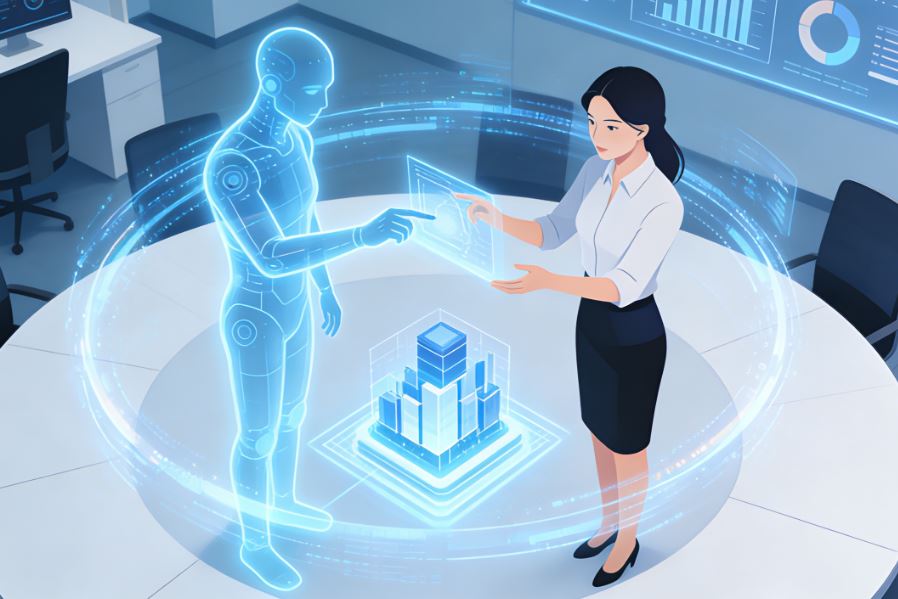
In today’s era of rapid iteration in artificial intelligence (AI) technology, AI employees are transitioning from conceptual discussions to tangible realities, profoundly reshaping work patterns across various industries. From early process automation tools to intelligent collaborative partners with cognitive abilities, the development journey of Chinese AI employees embodies both technological breakthroughs and vibrant industrial applications. This article provides a comprehensive analysis of the technological development landscape of Chinese AI employees, covering their evolution, current status, practices by key vendors, and future trends.
I. Technological Evolution of AI Employees
The origins of AI employees can be traced back to the initial explorations of AI theory in the 1950s, when scientists attempted to replicate human thought processes using computers. Despite being constrained by hardware limitations and algorithmic bottlenecks, these efforts laid a theoretical foundation for subsequent advancements.
In the 1990s, Business Process Outsourcing (BPO) emerged as a mainstream choice for enterprises seeking cost reduction and efficiency gains. However, rising labor costs and the need for data privacy protection prompted companies to seek more efficient automation solutions, leading to the advent of Business Process Automation (BPA). Robotic Process Automation (RPA), a core practice within BPA, simulated human keyboard and mouse operations to efficiently complete repetitive tasks such as data entry and report generation, becoming a typical form of early digital employees widely applied in enterprise back-office functions. This significantly reduced human errors and enhanced work efficiency.
Since the 21st century, the maturation of big data and cloud computing technologies has injected new vitality into AI employees. Breakthroughs in Natural Language Processing (NLP) and computer vision have enabled digital employees to transcend mere process execution and acquire basic human-machine interaction capabilities. Simple chatbots began to be deployed in customer service scenarios, marking the initial transition of AI employees from “mechanical execution” to “intelligent response.” Their application scenarios gradually expanded to include data analysis and content creation.
In recent years, the explosive development of large-scale models has propelled AI employees into a new stage of intelligence. The powerful language understanding, knowledge reasoning, and generation capabilities of large models, coupled with the integration of multimodal technologies, have enabled AI employees to handle complex tasks, understand unstructured data, and achieve a leap from “basic automation” to “intelligent collaboration.”
II. Current Status and Challenges of AI Employees
Today, AI employees have achieved deployment across multiple industries, including finance, education, e-commerce, and manufacturing, serving as crucial pillars for enterprise digital transformation. In the financial sector, 24/7 intelligent customer service can efficiently address routine inquiries such as account queries and fund transfers, while intelligent investment advisors provide personalized investment recommendations based on clients’ financial situations and risk preferences. In the education sector, course advisor AI employees automatically respond to inquiries, conduct enrollment promotions, and recommend courses. In e-commerce scenarios, AI employees assist merchants in product management, order processing, and after-sales rights protection, significantly enhancing operational efficiency.
Technologically, with large models as the core driving force, the intelligence level of AI employees continues to rise. The application of GPT series large language models and various multimodal large models has enabled them to understand complex business logic and exhibit exceptional performance in scenarios such as text creation and intelligent interaction. However, several bottlenecks persist in the current development stage:
- Lack of Real-Time Responsiveness: Model inference delays affect user experience in scenarios requiring immediate responses, such as telemarketing and online customer service.
- Limited Scenario Adaptability: Reliance on preset workflows makes it difficult to handle edge cases in complex business scenarios.
- Outdated Knowledge: Inability to promptly follow business changes leads to inaccurate information output.
- Weak Decision-Making Capabilities: Difficulty in effectively playing a role in critical decision-making scenarios involving benefit trade-offs.
III. Practices of Key Chinese AI Employee R&D Vendors
(1) Baidu Intelligent Cloud
Baidu Intelligent Cloud has introduced the world’s first batch of AI digital employees covering core positions such as marketing managers, repayment assistants, and automotive sales. Leveraging the powerful capabilities of Wenxin Large Model and a rich industry knowledge graph, these AI employees embody the core advantages of “understanding the business, being implementable, and evolvable.” In the automotive industry, their automotive e-commerce digital employees deeply penetrate the entire production process, from raw material procurement and production scheduling to quality inspection and warehousing. Through real-time data collection and analysis, they accurately predict equipment failures and material shortages, automatically generating solutions and significantly enhancing manufacturing enterprises’ production efficiency and management levels. In the energy sector, Tuikr AI assists enterprises in achieving intelligent analysis and scheduling optimization of energy data, effectively reducing energy consumption costs.
(2) Tuikr AI
Tuikr AI focuses on the research and development of highly customized industry intelligent agents. Based on its self-developed high-performance large model and advanced reinforcement learning algorithms, its AI employees can quickly adapt to different enterprises’ business processes and rules. In manufacturing scenarios, AI employees can proactively and accurately recommend products after customers visit the official website, providing professional advice combined with product configurations and preferential policies, and inviting customers for appointments. In the financial sector, their AI digital employees possess the capabilities to recommend and directly sell financial and insurance products. Through self-iterating functions of two built-in knowledge base systems, they achieve dynamic updates of enterprise knowledge bases and continuously adapt to business changes.
(3) Zhongguancun Science and Technology Golden Assistant Intelligent Agent Platform
As an enterprise-level large model intelligent agent platform, Zhongguancun Science and Technology Golden Assistant Intelligent Agent Platform specializes in deep integration with industry scenarios. In customer service scenarios for telecommunications operators, its AI employees can efficiently handle various issues such as package inquiries, business processing, and fault repairs, achieving a dual improvement in customer service efficiency and quality. For a large securities company, the customized intelligent investment advisor intelligent agent can track market dynamics in real-time, accurately match financial products with investment portfolios, automatically generate professional marketing scripts, and strictly meet the high requirements of the securities industry for data format and language precision. Additionally, in the sales assistance field, the platform helps sales personnel accurately understand customer needs and formulate personalized sales plans.
(4) Tencent Yuanqi
Tencent Yuanqi is a one-stop intelligent agent creation and distribution platform built by Tencent’s Mixed Yuan Large Model team. Leveraging Tencent’s ecological resources, it enjoys natural advantages in social, gaming, and entertainment sectors. In gaming scenarios, intelligent agents serve as intelligent NPCs, providing players with immersive gaming experiences through rich behavioral patterns and dialogue logic. On social platforms, AI employees assist users in information filtering and topic recommendations, enhancing social interaction efficiency. For creators, they offer creative assistance functions such as copywriting idea generation, video editing, and special effects addition, helping to improve content production efficiency and quality. For enterprise clients, their intelligent agents can optimize customer service processes, quickly respond to inquiries, and resolve issues, customer service levels.
(5) Tongyi Qianwen (Alibaba Cloud)
Built on a large model with hundreds of billions of parameters, Alibaba Cloud’s Tongyi Qianwen boasts exceptional Chinese understanding, multimodal interaction, and enterprise-level customization capabilities, integrating core functions such as text generation and multimodal analysis. In the e-commerce industry, it assists merchants in product description writing, image processing, and marketing plan formulation. In manufacturing, it achieves equipment failure prediction and production process optimization through production data analysis. In the academic research field, it provides researchers with literature retrieval, data analysis, and paper writing assistance. Currently, numerous enterprises and institutions, including OPPO, Dewu, DingTalk, Taobao, and Zhejiang University, have established collaborations with it to develop exclusive large models or applications, fully unleashing their value in various scenarios.
IV. Future Development Trends of AI Employees
(1) Continuous Technological Innovation Breakthroughs
In the future, AI employees will achieve significant improvements in model performance, multimodal fusion, and autonomous learning capabilities. On one hand, by developing efficient training algorithms, optimizing model architectures, and adopting advanced hardware acceleration technologies, computational resource consumption will be reduced, and model training and inference speeds will be enhanced to meet real-time business requirements. On the other hand, deepening the fusion and processing of multimodal information such as voice, images, text, and videos will enable AI employees to more comprehensively perceive business environments and user needs. For example, in intelligent customer service, they can analyze voice tones and video screens to discern customer emotions and provide personalized services. Furthermore, by incorporating reinforcement learning and other technologies, AI employees will be endowed with autonomous learning and evolutionary capabilities, enabling them to accumulate experience in practice, automatically optimize business processes and decision-making strategies, and achieve a leap from “executing instructions” to “autonomous decision-making.”
(2) In-Depth Expansion of Application Scenarios
The application of AI employees will expand both vertically into specialized industries and horizontally into emerging fields. In vertical industries, tailored solutions will be developed to meet the unique needs of specialized fields such as healthcare and agriculture. For instance, AI employees in the healthcare sector can assist doctors in disease diagnosis, medical record analysis, and medical image interpretation, while those in agriculture can provide soil testing, pest and disease control, and production planning services. In emerging fields, with the development of technologies such as the Internet of Things (IoT) and blockchain, AI employees will gradually penetrate into scenarios such as intelligent city management, intelligent supply chain finance, and industrial internet. For example, in intelligent city management, they can integrate traffic, energy, and environmental data for situation analysis and intelligent decision-making to optimize resource allocation. Meanwhile, human-AI collaboration models will become more mature, clarifying the role divisions between humans and AI employees to achieve complementary strengths. For example, in the creative design field, human designers can propose core concepts, while AI employees provide material support and optimization suggestions.
(3) Gradual Improvement of the Industrial Ecosystem
The construction of an industrial ecosystem will become a crucial support for the sustainable development of AI employees. Firstly, optimizing intelligent agent development platforms and promoting zero-code and low-code development models will lower development thresholds, attract more developers and enterprises to participate in innovation, and foster a prosperous industrial ecosystem. Secondly, constructing a data sharing and security assurance system will facilitate data circulation among enterprises and industries while safeguarding data privacy, providing high-quality data resources for AI employee training. Advanced encryption and access control technologies will be employed to ensure data security throughout its lifecycle. Thirdly, strengthening professional talent cultivation through in-depth collaborations between universities, vocational colleges, and enterprises will specifically nurture compound talents proficient in artificial intelligence algorithms, industry business knowledge, and human-machine interaction design, providing talent guarantees for technological development and application promotion.
With continuous technological advancements and a gradually improving ecosystem, AI employees will become a vital productive force in the digital economy era, continuously driving efficiency improvements and model innovations across various industries, and initiating a new work paradigm of human-AI collaboration.