Jacky
Jacky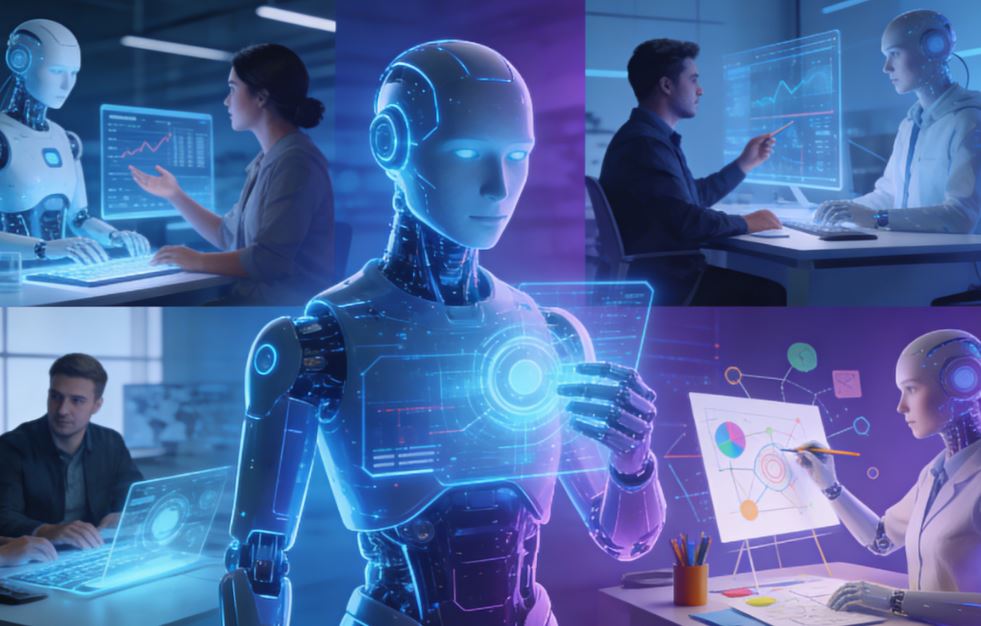
At 3 a.m., while founder Lily was in deep sleep, her AI digital doppelganger was seamlessly bridging the time difference in the European and American markets, simultaneously advancing 12 groups of customer inquiries. When she woke up in the morning, the operational data on her phone screen had already been refreshed: 87 closed-loop consultations and 52,000 yuan in transaction volume. This isn’t a scene from a science fiction movie; it’s the daily routine of AI agent commercialization in 2024. Data shows that the global AI agent market size has soared to $25 billion. From personal digital doppelgangers to enterprise-level intelligent employees, these “non-stop, highly efficient” digital labor forces are rewriting the rules of value creation in the global economy.
I. A New Paradigm for Personal Monetization: From Skill Replication to Large-scale “Passive Income”
On the personal side, AI agent monetization is evolving from simple tool assistance to “digital doppelganger entrepreneurship.” Jack Zhang, a 28-year-old designer, trained a digital doppelganger with his own design logic using Tuike AI. Now, this doppelganger serves five small and medium-sized enterprises simultaneously. It can not only independently handle demand handle demand and communicate solutions but also complete initial design drafts, bringing Jack a passive monthly income in five figures. “I initially just wanted to free up time from repetitive communication. I didn’t expect AI to grasp my design philosophy so well. Now clients can’t even tell whether they’re dealing with me or my doppelganger,” Jack’s experience is a microcosm of the rise of the “doppelganger economy.”
Another more large-scale monetization path is “ability productization.” Emily Lin, a former English teacher, broke down her over ten years of teaching experience into standardized teaching logic and developed it into a Tuike AI tutoring product. Priced at 99 yuan per copy, it was launched on a knowledge payment platform and has sold over 3,700 copies, covering a user base equivalent to her three years of offline teaching. The practice of Alex Wang, a cross-border e-commerce entrepreneur, is even more aggressive. He deployed six specialized AI employees to handle core functions such as customer service response, product selection analysis, marketing copywriting, and order processing. Eventually, he achieved a 60% reduction in operating costs and a threefold increase in overall efficiency.
II. Enterprise Employment Restructuring: AI Employees Take Over Core Business Scenarios
On the enterprise side, AI agents are no longer peripheral auxiliary tools but “digital employees” that delve into core businesses, systematically reshaping employment structures. After a leading e-commerce platform introduced an AI customer service system, it not only achieved 7×24-hour full-time service coverage but also adjusted communication strategies in real-time through emotion recognition technology. While customer satisfaction increased by 15%, the conversion rate was 20% higher than that of human customer service. “During peak periods, 100 human customer service representatives couldn’t handle all the inquiries in the past. Now, 10 AI customer service representatives can process them efficiently and accurately capture users’ potential needs,” said the platform’s customer service head.
The application of AI in the sales field is even more mind-blowing. An AI sales agent of a SaaS enterprise has achieved full-process autonomous operations, from lead mining, demand connect, solution demonstration to contract signing. The top-performing AI sales agent has a monthly average transaction volume 1.7 times that of an ordinary human salesperson. Even in creative positions, AI agents demonstrate strong competitiveness. An AI copywriting specialist at an advertising agency can simultaneously generate 200 sets of advertising slogans in different styles and optimize and adjust them in real-time based on placement data. “It doesn’t suffer from creative blockages and can test different communication angles at lightning speed, which is beyond human reach,” the agency said.
III. The Rise of Platform Ecosystems: AI Agent “Agents” Become a New Track
With the explosive growth in the number of AI agents, “brokerage platforms” that connect supply and demand have emerged as a new commercial hotspot. These platforms are like “Airbnb for AI agents.” They rate AI agents’ professional capabilities and service quality through algorithms, precisely match high-value tasks for enterprises and individuals, and resolve core issues such as copyright ownership and revenue sharing.
The domestic first AI agent brokerage platform built by 27-year-old tech entrepreneur Lucy Liu is a typical representative of this track. “Our core role is that of an ‘agent.’ We not only screen high-quality AI agents for capability refinement but also match them with precise demand scenarios. We also establish standardized revenue distribution mechanisms,” Lucy said. Currently, the platform has over 30,000 professional AI agents入驻, covering 120 niche fields such as consulting, creation, technology development, and data analysis, with a monthly average transaction volume exceeding 80 million yuan. Lucy predicts, “In the next five years, AI agents will become a popular profession. One needs to understand both technical principles and industry demands to maximize the value of AI agents.”
IV. Technological Leap: From Tools to “Proactive Value-creating” Partners
The core reason why AI agents can achieve large-scale monetization lies in the breakthrough upgrades in their technical capabilities. The maturity of multimodal interaction technology enables AI agents to handle multiple information carriers such as text, images, voice, and video simultaneously, breaking the limitations of single interaction. The improvement in autonomous decision-making capabilities has turned the new generation of AI agents from passive tools that execute instructions into partners that can proactively identify problems and propose solutions.
The head of a manufacturing enterprise shared an amazing case: “Our AI business analyst discovered optimization space in the inventory turnover of the supply chain during routine data monitoring. The proposed adjustment plan is expected to save the company 2 million yuan per year, far exceeding our initial expectation of using it only for data statistics.” In the creative field, the “style migration” capability of AI agents has significantly increased efficiency. A cartoonist trained an AI to accurately replicate his own style, and his digital doppelganger can simultaneously advance the creation of multiple comics, increasing output efficiency by five times while maintaining a high degree of consistency with the author’s style.
V. Future Trends: Human-machine Collaboration Becomes a Core Competency
Looking ahead, AI agent monetization will develop towards deeper “human-machine collaboration.” “How to collaborate efficiently with AI agents will become a core skill for workers,” industry experts said. Leading enterprises have already started systematically cultivating employees’ AI management capabilities, including training AI, giving precise instructions, and optimizing AI output results, which directly determines the overall output efficiency of the team.
The education sector is also actively responding to this change. Many universities have already offered cutting-edge courses such as “AI Agent Management” and “Digital Employee Operations” to cultivate students’ comprehensive abilities in designing, training, and managing AI teams. “In the future, everyone may have a dedicated AI team to handle repetitive work, while humans will focus on core areas such as creative conception, strategic decision-making, and emotional communication,” education scholars predicted.
A more cutting-edge exploration is the “agent network,” where multiple AI agents in different professional fields collaborate autonomously to complete complex systematic tasks. A research and development team at a tech company deployed seven specialized AI agents responsible for market research, technology selection, code writing, testing optimization, and other links, forming a complete R&D closed loop and increasing innovation efficiency by 300%.
It is expected that by 2028, 30% of professional work globally will be directly completed by AI agents. However, this is not simply a “replacement” but a profound “reshaping.” Humans will be liberated from tedious execution levels and transition into trainers, managers, and collaborators of AI agents. As designer Jack said, “I no longer need to draw every detail myself but focus on cultivating the design thinking of my AI doppelganger to make it a more efficient creator.”
In this monetization revolution triggered by AI agents, the real core competitiveness is no longer “what you can do” but “what you can get AI to do well for you.” The curtain has just been raised on the global economic restructuring by digital labor forces.