Jacky
Jacky
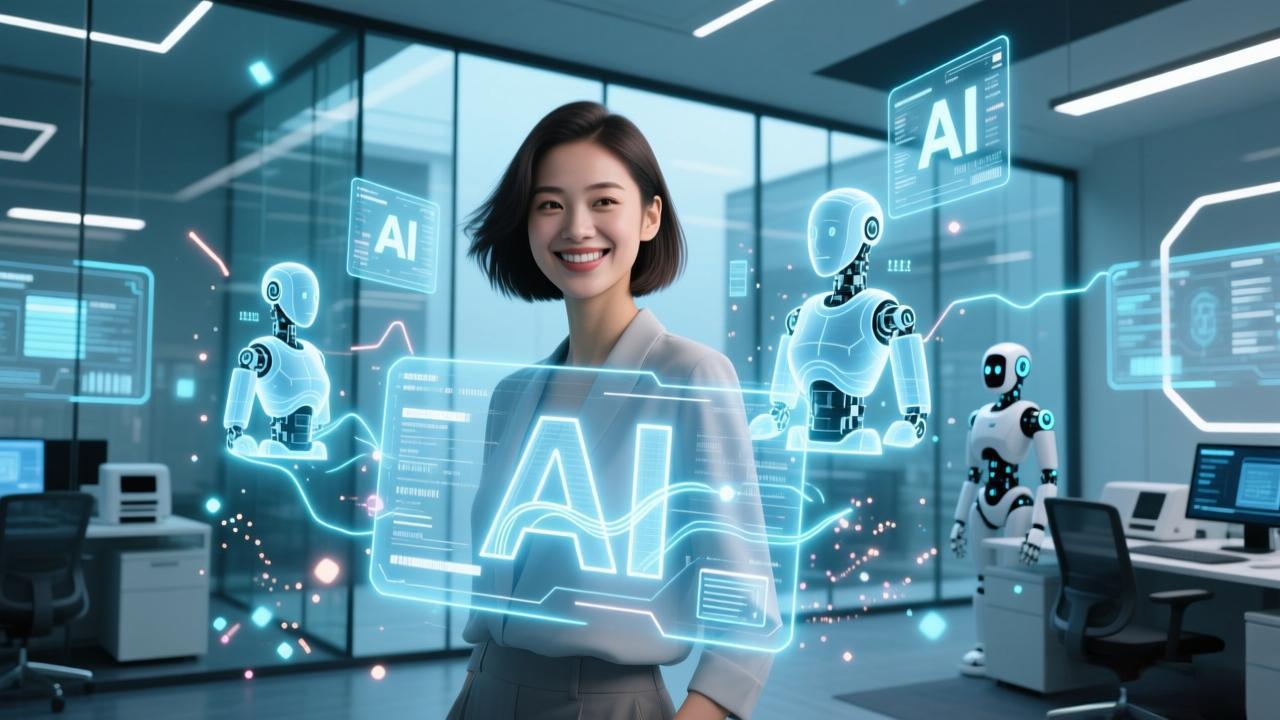
As soaring labor costs and a widening shortage of professional talent become universal challenges plaguing businesses worldwide, a new form of “workforce” is quietly reshaping corporate operational logic — AI employees. Unlike traditional software tools, AI employees exist as “digital entities with intelligent decision-making capabilities,” deeply participating in core business processes such as customer service, sales, and legal services, marking a transformative shift from “auxiliary tools” to “core productive forces.” In this wave of productivity revolution, AI employees are no longer a distant concept but a tangible solution that is rapidly gaining traction across industries globally.
From “Tool Empowerment” to “Role Integration”: The Evolutionary Logic of AI Employees
The rise of AI employees is no accident; it is the joint result of technological iteration and market demand. Early enterprise digital tools, such as CRM systems and intelligent customer service software, were essentially “passive response” tools that required human employees to take the lead in operations. In contrast, AI employees have achieved a breakthrough in “proactive service.” By integrating multi-modal large language models, digital twins, and industry knowledge bases, they possess the ability to independently understand needs, execute tasks, and optimize processes.
The core value of this evolution lies in “role integration.” Unlike simple assemblies of functional modules, AI employees act as “virtual colleagues” with specific professional attributes. For instance, digital lawyers can accurately interpret contract clauses and generate compliance opinions; digital psychologists provide emotional support to employees through sentiment analysis; and AI business cards automatically follow up on customer leads and sync data to enterprise CRM systems. This “anthropomorphic” service model facilitates more natural collaboration between AI and human employees, significantly lowering the threshold for technological adoption in businesses of all sizes.
Scenario Deepening: The Enterprise Value Mapping of AI Employees
The commercial value of AI employees is ultimately reflected in measurable efficiency improvements and cost optimization in specific scenarios. Built on advanced digital agent platforms, AI employee service matrices now cover the entire business chain, penetrating multiple core areas of enterprise operations and delivering quantifiable returns on investment globally.
Core Scenario 1: Sales and Customer Service — Dual Growth in Conversion Rates and Satisfaction
Sales and customer service are the most critical front-end links for enterprises and also the most mature areas for AI employee implementation. In traditional models, customer service personnel require long training periods, leading to inconsistent service quality, while sales teams struggle with low efficiency in lead screening and delayed follow-ups. AI employees address these pain points through “intelligent interaction and data-driven operations.”
A medium-sized e-commerce company in Europe implemented AI sales agents, which automatically conducted initial customer communications, created demand profiles, and accurately pushed high-intent leads to human sales staff, boosting lead conversion rates by 42%. Its AI customer service agents provided 24/7 online responses, achieving an 85% problem resolution rate and a 30% increase in customer satisfaction, while the overall service cost was only 1/3 of that of a traditional human team. This collaborative model — where AI handles basic services and humans focus on high-value decision-making — has become the new standard in the sales and customer service sector globally.
Core Scenario 2: Professional Services — “Digital Experts” Breaking Resource Barriers
In professional service fields such as law, healthcare, and psychological counseling, the scarcity of high-quality resources has long been a major pain point for enterprises. AI employees, leveraging the “digital human + professional knowledge base” model, have made high-quality professional services accessible to small and medium-sized enterprises (SMEs) worldwide.
Digital lawyers integrate massive legal databases and case libraries, enabling rapid contract review and legal risk assessment. A manufacturing firm in North America reported an 80% increase in contract review efficiency and a 65% reduction in basic legal costs after adopting AI legal agents. Digital psychologists, powered by sentiment analysis technology, provide anonymous psychological counseling services to employees. An internet company in Asia saw a 25% increase in the detection rate of employee psychological stress and an 18% improvement in employee retention after implementing such services. These digital experts not only possess professional capabilities but also enhance service affinity and trust through their digital human forms.
Core Scenario 3: Internal Management and Training — Balancing Standardization and Personalization
Balancing standardization in internal management and personalization in training has long been a challenge for enterprises. AI employees have achieved an organic unification of the two through flexible scenario adaptation. For example, digital trainers can automatically generate personalized training courses based on the needs of employees in different positions and answer questions through real-time interaction, reducing the onboarding training cycle for new employees by 50%. Digital administrative assistants automate routine tasks such as attendance tracking and meeting scheduling, freeing up administrative staff from repetitive work to focus on more valuable service-oriented tasks.
Flexible Deployment: The Core Advantage of Global AI Employee Services
Enterprise needs vary significantly across regions and industries, making a one-size-fits-all service model impractical. The core competitiveness of leading global AI employee platforms lies in their “full-scenario adaptation and flexible deployment” capabilities, which have been key to their rapid market acceptance.
In terms of service forms, AI employees cover diverse enterprise needs — from external-facing roles such as digital sales and customer service agents to internal management roles like administrative and training assistants, as well as professional roles including digital lawyers and psychologists, forming a comprehensive enterprise service matrix. In terms of deployment methods, they support multiple forms such as mini-programs, apps, and all-in-one terminals. Enterprises can choose the most suitable access method based on their specific scenarios, whether it is an in-store all-in-one digital customer service terminal or an online AI business card, enabling rapid implementation.
Notably, the OEM cooperation model has provided a low-threshold customized service path for enterprises worldwide. Partners can leverage AI employee platforms to quickly develop their own AI employee products without substantial R&D investment, allowing them to seize the market opportunities in the AI employee sector. This open cooperation model is enabling AI employee technology to penetrate more industries and build a vast global service ecosystem.
The Future Is Here: Accelerated Large-Scale Adoption of AI Employees
With advancing technological maturity and declining costs, AI employees are shifting from “optional” to “essential” for enterprises. According to industry forecasts, the global AI employee market size is expected to exceed $18 billion by 2027, with a compound annual growth rate (CAGR) of 68%, and the enterprise service sector will account for over 70% of the market share. In this wave of large-scale adoption, platform-based enterprises with core technologies, scenario deepening capabilities, and flexible service models are poised to take the lead.
For global enterprises, the question is no longer “whether to adopt AI employees” but “how to choose the right solution.” AI employees have become a strategic tool for enterprises to reduce costs, improve efficiency, and enhance core competitiveness in the digital economy era. As technological innovation continues to drive the evolution of AI employees, their role in reshaping global enterprise operations will become increasingly prominent, ushering in a new era of productivity.