Jacky
Jacky
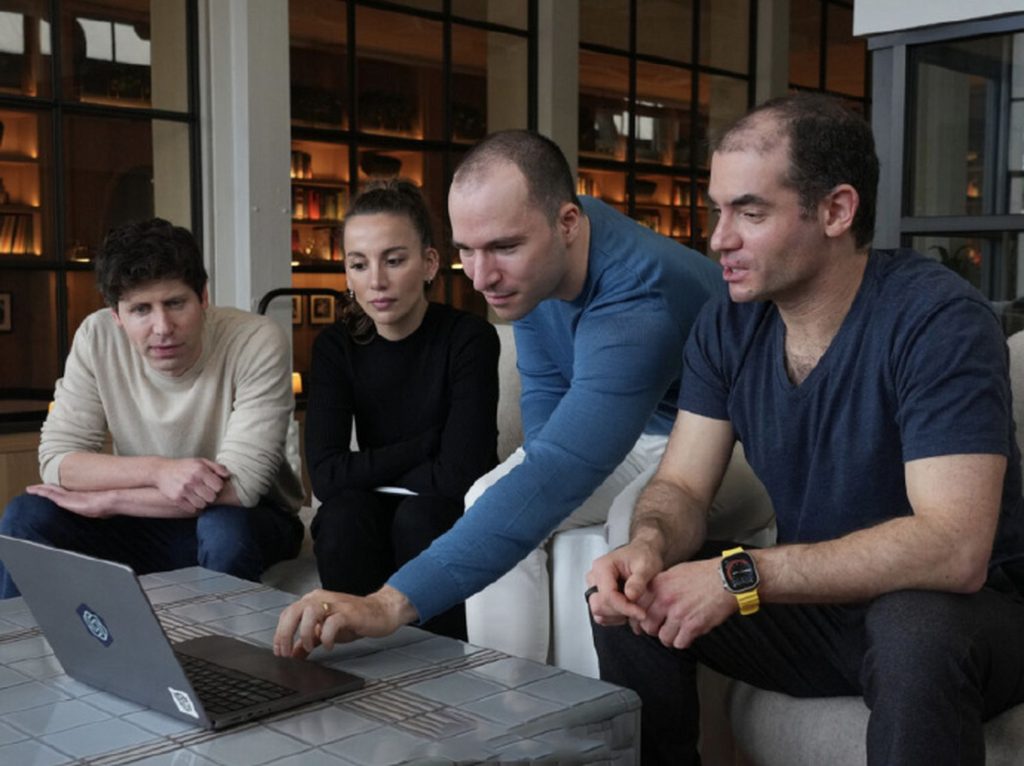
23, never finished high school.No university diploma on his resume.But in OpenAI’s internal system, his title reads: Gabriel Petersson, Research Scientist (Sora Team).After dropping out of high school, Gabriel worked at Depict.ai, Dataland, and Midjourney before officially joining OpenAI in December 2024 to research video generation.No degree. But a string of projects.On November 28, 2025, he shared his learning method on the podcast Extraordinary: When facing a new field, he never starts with thick textbooks. Instead, he tackles real problems, lets ChatGPT break them into steps, writes code, debugs, then learns backward—from the problem to math, algorithms, and papers.Do first, learn later. His approach: Learning AI with AI.And he’s not alone.Last month, OpenAI CEO Sam Altman (also a dropout) said he envies today’s dropout generation. With AI tools, they can build useful products faster, while traditional diplomas are losing their edge.A Swedish high school dropout walked from a classroom to Sora’s lab by seizing this era’s biggest opportunity:Diplomas are depreciating. Skills are being revalued. Learning is being rewritten by AI.So how did he do it?
Part 1 | Selling Pokémon Cards at 14, Joining OpenAI at 23
Many assume he’s a coding prodigy, a straight-A student with competition medals.Reality? No degree, no famous mentors, no connections.But he’s always done one thing: built projects, hit roadblocks, then iterated.First pivot: Age 14Living in rural Sweden, he earned his first $20K by reselling Pokémon cards. Wanting a price-comparison website, he Googled “how to build a webpage” on YouTube. No teachers, no pressure—just him teaching himself to build his first tool.“I wasn’t a programmer. I just wanted something, so I built it.”Second pivot: COVID-19 yearAt 18, he built a hand sanitizer price-comparison site in a week, earning $22K in its first week. Pandemic demand surged, and his simple scraper + frontend solved a real problem.Months later, he was recruited as CTO of Curb Food (Sweden’s largest cloud kitchen, 80 employees). He built a 7-person engineering team from scratch, developed a kitchen management system, coded and debugged on a sofa.The project launched. He left. But he learned one thing: Success or failure doesn’t matter. What matters is the product you leave behind.Third pivot: Discovering MidjourneyIn 2023, he stumbled upon AI-generated art and was blown away. That day, he dove headfirst into AI.Not a design expert, he created one of Midjourney’s best UI tools: fast-grid. All self-taught: How to arrange the interface? How to structure prompts? How to tweak model parameters? Trial after trial.The tool got copied, recommended, and shared. Some called him a hacker, but his goal was simple: Make Midjourney easier to use.No credits, no certificates—but real outputs: Products built, models fixed, bugs squashed.OpenAI wanted exactly that:
- •A working GitHub project.
- •A demo solving real problems.
- •Someone who actually doesthings.
He never stepped into a university. But he walked into the world’s top AI lab, step by step.
Part 2 | Learn by Doing, Not Learn Then Do
Traditional AI video research demands a PhD.But Gabriel relied on real, executable GitHub projects—not diplomas.He admits he initially didn’t understand diffusion models or even Transformer attention mechanisms.But instead of opening textbooks, he opened ChatGPT.He asked specific questions: “If I want to build a small video-generation model, what’s the first thing to learn?”ChatGPT answered. He dug deeper: “Can you give an example? Code? Explain each line? Pretend I’m 12 and explain again?”Then he copied the code into his project, tested it. Hit bugs? Screenshotted errors, iterated until fixed.No fixed steps. No standard answers. Just one goal: Fix this bug in front of me.Gabriel calls this:Recursive learning from the task.Start with the problem, reverse-engineer the knowledge chain, fill gaps layer by layer.Traditional path (bottom-up):Learn math → probability → neural networks → then understand diffusion models.Gabriel’s path (top-down):Diffusion model bug → trace to attention → need math → learn concepts → fix code.Result? “With this method, I mastered diffusion models in three days. The traditional path takes six years.”Not theoretical understanding—but hands-on parameter tuning, practical application.This ChatGPT-powered reverse learning gave him PhD-level skills—in days, not years.“Most people ask ChatGPT once and quit. I keep asking until I truly understand.”From tasks, intuition, and errors—he traced back knowledge.AI is the best teacher. But you have to chase the answers.
Part 3 | Not Just Using ChatGPT, but Researching with It
Sora is one of OpenAI’s most complex multimodal models.Generating each video frame requires orchestrating billions of parameters, multi-module coordination, and spatiotemporal reasoning.This isn’t about chatting for an image. It’s real AI R&D: training models, tuning parameters, coding, debugging. Gabriel does this daily.His typical workflow:
- 1.Observe Sora’s generated videos, spot inconsistencies.
- 2.Hypothesize the flawed architecture layer, prompt GPT-4 to analyze.
- 3.Review/edit core module code based on suggestions.
- 4.Debug with ChatGPT or cross-check papers—retrain, evaluate visual results.
- 5.If wrong, ask again, retry, retrain.
Often, his chats with GPT aren’t for answers—but to refine ideas.He briefs GPT like a human colleague: “I adjusted these parameters in this module. The generated video has issues—I think the model overlooks details, maybe needs more temporal info…”GPT responds with two paths:
- •Quick-fix: Tweak weights, retrain directly.
- •Structural-change: Add mechanisms (e.g., depth-wise conv).
Gabriel decides which to try.He makes the final call. He writes the code.But GPT is his second brain: Fearless in trials, tireless, unfrustrated, broad in coverage, always responsive.In traditional research, a PhD student waits for advisors, reference code, or lab meetings to proceed.Gabriel outsources these to GPT—a 24/7 research partner.“I’m not beating PhDs with ChatGPT. I’m using it as a researcher.”The difference isn’t the model’s intelligence—but how you use it.
Part 4 | Diplomas Don’t Matter. These 3 Things Do
Gabriel downplays the “dropout success” label. In interviews, he clarifies:“I didn’t get into OpenAI by proving I’m special. I showed them I’m already doing what they need.”So what did he do right? Three things:1. Start with projects, not booksNever asks “Which concept to learn first?”Instead: “What problem should I solve now?”Midjourney frustrating? Build a UI tool.Don’t get diffusion models? Start with a video demo.Want to research Sora? Build a simplified version and tune it.Learn by doing. Every project fills a knowledge gap.2. Use AI to accelerate understanding, not skip itNot using GPT to write code—but to understand it.Ask until concepts click. Debug with GPT analyzing each line. Let GPT summarize key paper changes.Most use AI to avoid thinking. He uses AI to enhance thinking.3. Let projects speak, not diplomasNo degree, no awards, no recommendation letters for OpenAI. But he submitted:
- •A working GitHub project (fast-grid).
- •Engineering experience at Midjourney.
- •A self-built video-generation pipeline.
Not what he learned—but what he built.OpenAI hired him not for reciting “transformer” terms—but for building a working transformer.They want problem-solvers, experiment-drivers, result-producers—not noun-memorizers.Many call it an “underdog success.” But it reflects a bigger trend:Diplomas prove you attended class. Projects prove you did the work.Following a syllabus is step-by-step. Following problems is real skill.AI breaks knowledge barriers. With AI, you can learn anytime. Whether you learndepends on how you ask.In the AI era, scarcity isn’t knowledge—but questioning ability and self-driven learning.Future hiring won’t ask “Where did you graduate?”but “Can you use AI to create real results?”
Epilogue | Works Speak Louder Than Exams
Gabriel’s story isn’t about rebels beating the system.It’s a replicable AI-era learning path:Start with projects. Accelerate with AI. Prove with works.Not an exception—but a paradigm shift:
- •Not learn then do—but do while learning.
- •Not wait for diplomas—but let projects speak.
- •Not use AI to write—but use AI to deeply understand.
He says: “I’m not a genius. I just changed how I learn—using AI to learn AI.”Now, works matter more than diplomas.